
Transaction technology leadership
Technical Due Diligence: Investor Checklist and 100-Day Plan
Scope technical due diligence around the investment thesis, evidence requests, sample findings, AI risks, remediation estimates, and an owned 100-day plan.
- By
- Fractional CTO Experts
- Published
- 2026-07-30
- Reviewed
- 2026-09-07
- Reading time
- 14 minutes
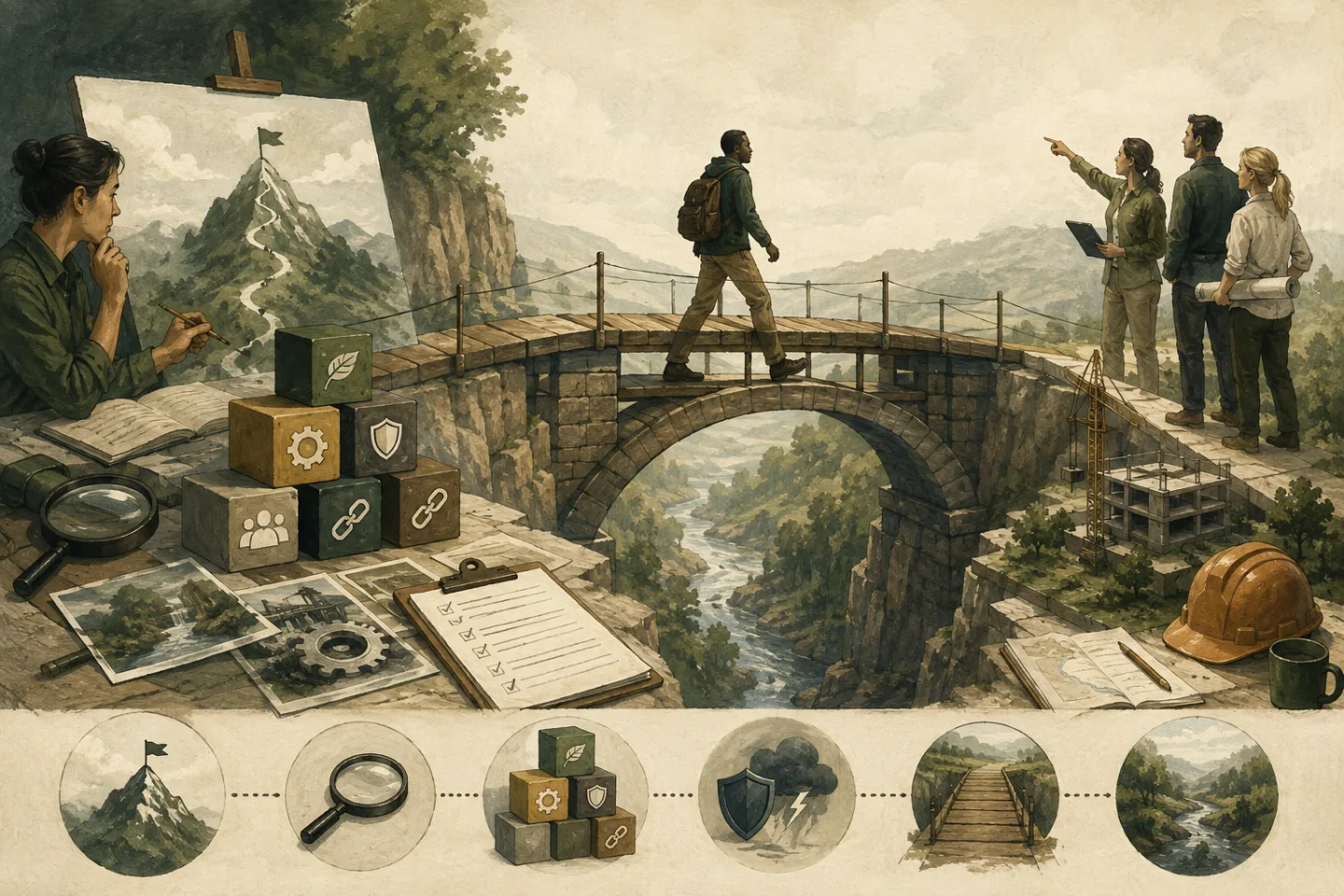
Technical due diligence should answer a transaction question: how does technology change the confidence, price, structure, risk, and post-close plan behind this investment?
It is not a generic audit and not a contest to find the most technical defect. Every software company has constraints and debt. The job is to distinguish ordinary improvement work from risks that threaten the investment thesis, require a condition or reserve, change the value-creation plan, or make critical claims unknowable.
- Start with the investment thesis
- Scope the connected systems
- Build an evidence room, not an interview transcript
- Grade risk in transaction language
- Handle management fairly
- Protect independence
- Bridge the report into the first 100 days
- Turn the investment thesis into testable questions
- An evidence request list with a reason for every request
- Sample finding: recovery capability remains unverified
- Assess technical debt without counting every warning as deal risk
- Add an AI diligence workstream when AI is material to the thesis
- Estimate remediation with ranges and dependencies
- Build a 100-day plan that management can operate
- Questions investors and founders often ask
- Choose the right diligence leader
- Practical next step
Start with the investment thesis
Before opening a repository, clarify how value is expected to be created.
Examples:
- grow enterprise revenue without service quality collapsing;
- expand into regulated markets;
- combine two platforms after an acquisition;
- improve margin through automation or cloud economics;
- separate a product from a parent company;
- add products faster on a shared platform;
- reduce customer concentration by supporting more integrations;
- professionalize delivery and leadership before exit.
Each thesis creates different diligence questions. A code-quality checklist cannot tell an investor whether the architecture supports the integration plan, the organization can execute the roadmap, or security evidence will satisfy target customers.
Scope the connected systems
A useful scope normally covers:
Product
What does the company sell, who uses it, where is product evidence strong or weak, and which commitments are embedded in the forecast?
Platform and data
How does the system work, scale, fail, recover, integrate, and evolve? What dependencies, licenses, data rights, and key-person knowledge matter?
Security and resilience
Which business exposures exist? How are identity, change, vulnerabilities, incidents, recovery, suppliers, and customer assurance governed?
Organization and delivery
Who owns which decisions? Can the team plan, build, operate, and learn predictably? Are leaders and critical people likely to remain?
Technology economics
What do infrastructure, licenses, vendors, support, and engineering capacity cost now? Which investment is required to achieve the plan?
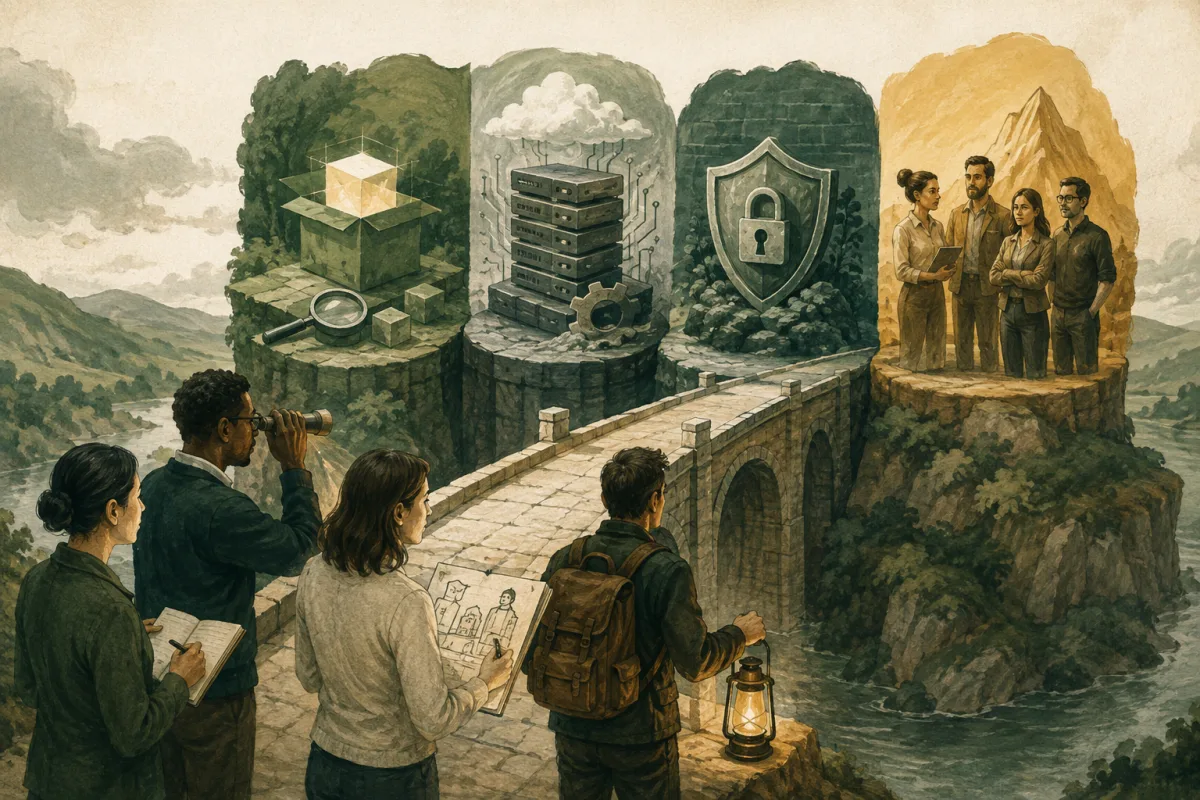
The systems interact. A fragile integration may be architecture debt, one-person knowledge, a contract limitation, and a forecast assumption at the same time.
Build an evidence room, not an interview transcript
Management interviews provide context, but claims should connect to observable evidence.
Request only what answers material questions:
- current architecture and data-flow views;
- product roadmap and major customer commitments;
- delivery history and work-in-progress;
- service objectives, incidents, recovery tests, and support themes;
- security policies plus operating evidence;
- infrastructure and vendor costs;
- organization structure, vacancies, attrition, and contractor dependencies;
- intellectual-property ownership and material open-source obligations;
- recent customer diligence responses;
- major migrations, rewrites, and transformation plans;
- selected repository and change-history analysis.
Absence of evidence is not automatically a fatal finding. It changes confidence. The report should distinguish “not provided,” “not maintained,” “tested and failed,” and “not applicable.”
Grade risk in transaction language
Avoid a flat list of red, amber, and green observations. Each material finding should state:
- the claim or expected capability;
- evidence reviewed;
- the condition observed;
- business impact;
- likelihood and timing;
- mitigation options;
- cost, ownership, and dependency;
- remaining uncertainty.
A useful classification might distinguish:
- thesis-threatening: the expected value path is implausible or unverified;
- transaction-material: price, structure, warranty, condition, or near-term investment may change;
- value-plan workstream: manageable, but requires an owned post-close initiative;
- ordinary operating improvement: valid work that does not materially change the deal;
- unknown: access or evidence is insufficient and a decision is required.
Do not turn every outdated dependency into a board issue. Do not hide concentrated knowledge or recovery failure as “normal technical debt.”
Handle management fairly
Diligence creates pressure. A fair process gives management the question, requests proportionate evidence, distinguishes fact from inference, and allows factual correction without negotiating the conclusion.
The assessor should understand why a decision made sense at the time. That context does not erase current risk; it prevents hindsight theatre.
Use specialists where needed. No single CTO is automatically qualified to assess regulated security, scientific systems, complex data rights, embedded software, or every cloud architecture.
Protect independence
If the assessor can earn a large remediation contract, disclose it. The buyer should see:
- the assessment standard;
- evidence behind findings;
- uncertainty and alternative interpretations;
- multiple mitigation options;
- which work management can own internally;
- whether implementation pricing affected the recommendation.
Independence does not mean refusing all later work. It means the diligence conclusion can stand without requiring the assessor’s solution.
Bridge the report into the first 100 days
Many diligence reports die after the investment committee. Convert material findings into a small number of owned workstreams.
For each:
- connect it to the investment thesis;
- name an accountable management owner;
- define the baseline and target condition;
- sequence decisions before delivery;
- estimate people, vendor, and capital needs;
- identify early evidence and decision gates;
- define board reporting and escalation;
- preserve room for management to improve the plan after close.
The board should monitor risk and value without remotely operating the engineering team. Ask whether the workstream remains connected to the thesis, whether evidence supports progress, and whether a new decision is required.
Turn the investment thesis into testable questions
An investor may describe the thesis as “scale the product into larger customers.” Translate that into specific capabilities before requesting evidence. Larger customers may need more demanding identity integration, service availability, reporting, procurement evidence, support coverage, or data separation. The relevant question is whether the company can provide those capabilities within the commercial plan, using a team and budget it can realistically obtain.
For a margin-improvement thesis, examine the sources of technology cost and the consequences of reducing them. A cloud bill may contain avoidable waste, but it may also support contractual resilience commitments. Reducing engineering expenditure may improve a near-term model while weakening the product work needed for retention. The assessor should make those connections explicit rather than treating every cost as independently removable.
For an acquisition integration, ask what actually must become shared. The buyer may need consolidated reporting while the products remain separate. It may need common identity and billing without combining every application. A vague assumption that two platforms will be merged can conceal a large, unnecessary transformation. Test the commercial requirement before estimating the engineering work.
Write these questions into the scope and preserve the mapping through the report. A finding about a deployment process should explain why it changes confidence in a customer, growth, margin, or integration assumption. If the finding does not affect the transaction thesis or an important operating risk, it may belong in an appendix rather than the investment committee's main decision.
An evidence request list with a reason for every request
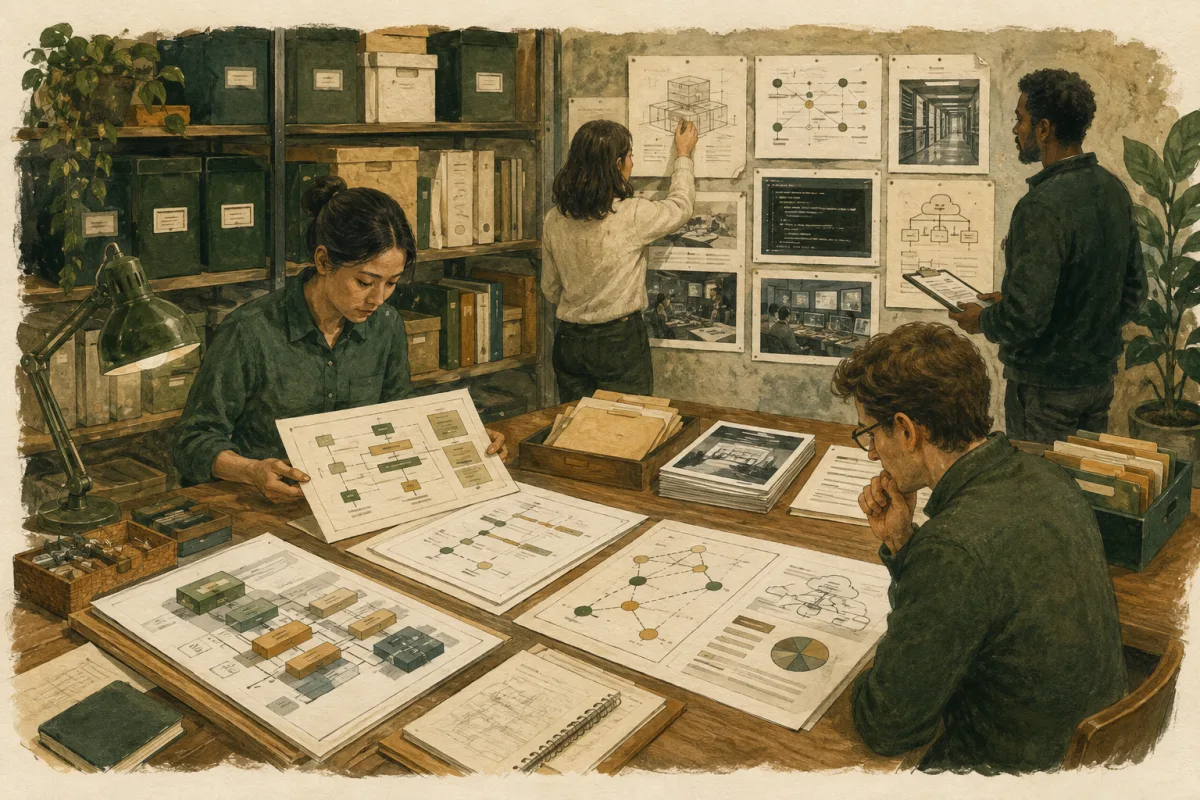
Requesting everything can overwhelm management without improving the assessment. Start with the evidence needed to test the most material claims, then expand where contradictions or gaps justify it. A request should identify the question it answers and the date or period the evidence should cover.
| Question | Useful evidence | What it cannot establish alone |
|---|---|---|
| Can the platform support the forecast? | Architecture walkthrough, usage patterns, performance observations, capacity constraints | An architecture diagram does not prove behaviour under future load |
| Can the team deliver the roadmap? | Recent commitments, completed work, interruptions, staffing and dependencies | A roadmap presentation does not prove available capacity |
| Can the business recover a critical service? | Recovery objectives, backup configuration, restore-test records, incident history | A configured backup does not prove successful recovery |
| Does the business control its software? | Repository access, contributor history, relevant agreements and licence inventory | A repository administrator is not necessarily the legal IP owner |
| Is the technology cost model credible? | Bills, contracts, allocation method, growth assumptions and planned work | One month's bill does not establish future unit economics |
| Is a claimed AI capability dependable? | Intended use, evaluation examples, observed failures, operating costs and oversight | A curated demonstration does not establish production reliability |
Use secure, authorised access appropriate to the material. A diligence team often needs read-only access or a supervised walkthrough rather than administrator privileges. Agree how sensitive information will be handled and which specialists can see it. The technical assessor should work with the transaction's legal and security advisers on restrictions rather than improvising an access policy.
Track requests in a shared register with the request owner, status, evidence location, and the assessment consequence of delay. A missing document may be unimportant if the underlying capability can be demonstrated another way. A missing recovery test may remain material even after several policy documents arrive. Judge the evidence against the question, not the number of files supplied.
Sample finding: recovery capability remains unverified
Consider an illustrative SaaS acquisition. Management states that a critical customer service can be recovered within its agreed business tolerance. The assessor sees configured backups and an operating procedure but no recent end-to-end restoration evidence. Interviews reveal that the person who previously maintained the procedure has left. This scenario is hypothetical and does not describe a client.
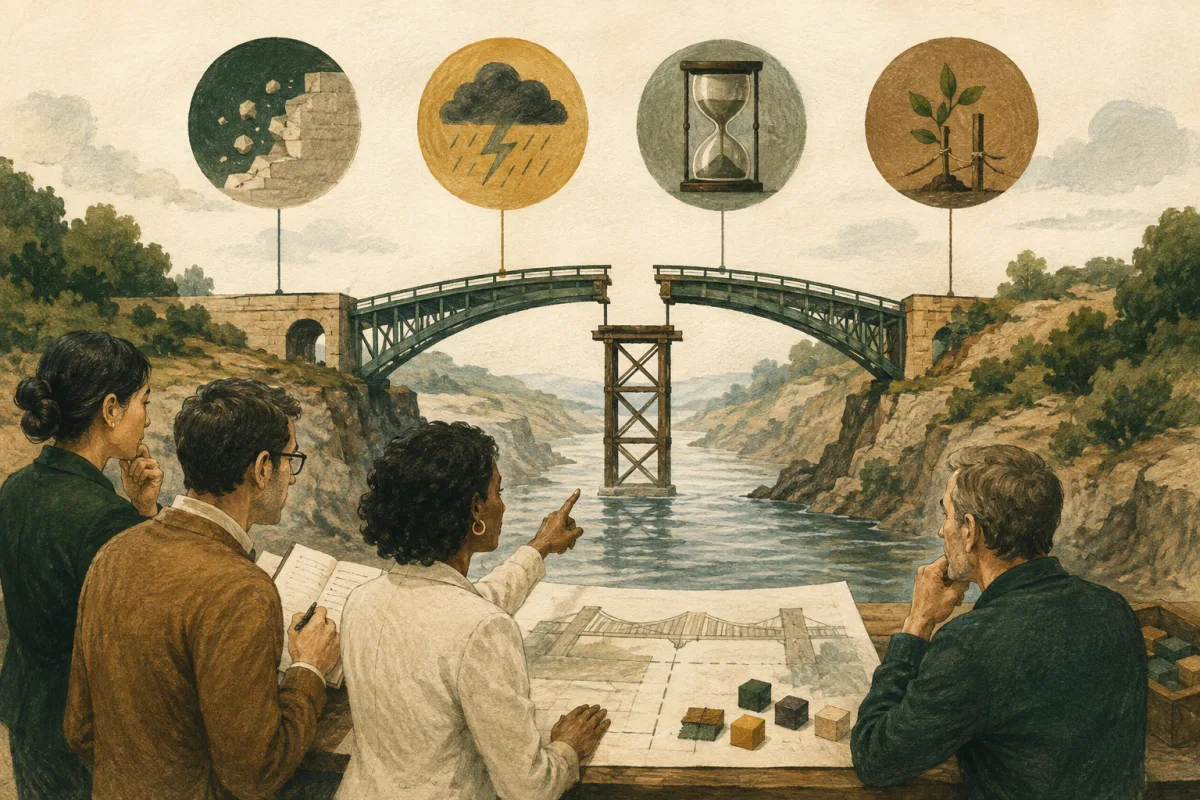
The fact is that the reviewed evidence does not demonstrate the claimed recovery capability. The inference is that the business may have an unrecognised continuity exposure. The assessor should not rewrite that inference as “the company cannot recover” unless an appropriate test or other evidence establishes it.
The next step is a proportionate request: demonstrate restoration in an approved environment, identify dependencies, and confirm who can operate the procedure. The test should be planned by authorised operators with attention to data handling and production risk. Diligence is not permission to perform an unannounced disruptive experiment.
The finding should explain the business consequence. If a critical service supports a large portion of customer activity, uncertainty about restoration may affect the buyer's near-term risk and operating plan. The report should identify the relevant dependency without claiming a precise financial loss that the evidence cannot support.
Possible responses include obtaining further evidence before commitment, assigning a post-close recovery workstream, changing the implementation sequence, or seeking advice on transaction protections. Legal and commercial decisions belong with the transaction team. The technical assessor supplies the evidence, limitations, and feasible remediation options that inform those decisions.
After a successful test, update the conclusion. The original concern may narrow to documentation, staffing continuity, or a particular dependency. Retaining an alarming rating after stronger evidence arrives makes the report less trustworthy. The record should show what changed and why.
Assess technical debt without counting every warning as deal risk
Technical debt matters when it changes the cost, pace, reliability, or optionality of the business. A static-analysis report can identify useful investigation targets, but the volume of warnings does not directly measure the cost of maintaining the product. Large, mature applications may contain many low-impact findings alongside a small number of consequential constraints.
Connect a suspected problem to operating evidence. If a module is difficult to change, examine recent changes in that module, test coverage relevant to its behaviour, incidents, and the availability of people who understand it. If the concern is an outdated dependency, ask about exposure, support options, upgrade constraints, and the work needed to address it.
Distinguish local improvement from architectural limitation. A team may be able to reduce deployment risk with a focused test and release change. Another problem may require replacing a core subsystem because it cannot support the business requirement. Those are different investments and should not be combined into a generic rewrite allowance.
Ask management to explain why debt accumulated. Product priorities, funding constraints, customer commitments, and deliberate tradeoffs may provide reasonable context. That context does not remove the current cost, but it helps the buyer decide whether the organisation can manage the next stage more effectively. A report that treats every historical compromise as incompetence is unlikely to produce a usable operating plan.
Add an AI diligence workstream when AI is material to the thesis
If AI capability is central to the product or margin plan, assess it as an operating system rather than a demonstration. Identify the intended users, decisions or actions the system influences, data inputs, model dependencies, evaluation process, human oversight, and failure handling. Determine which capabilities are currently in production and which exist only in a roadmap or prototype.
Ask how evaluation examples were selected. A collection of favourable demonstrations may show possibility while concealing ordinary failure modes. The buyer needs evidence from representative cases, including cases where the system should decline, defer, or request human review. The right evaluation depends on the task; a single generic accuracy percentage is rarely sufficient context.
Examine the economics under realistic operation. Include model usage, retrieval or storage, monitoring, human review, failed attempts, and support. A low-cost demo can become expensive when the product needs repeated calls, larger contexts, or intensive exception handling. Preserve assumptions about volume and quality so the transaction team can see how the model changes under different conditions.
Review data and model dependencies with the appropriate specialists. The technical assessor can identify where information enters the system and which services process it. Legal advisers assess relevant rights and contractual obligations. Avoid collapsing those different tasks into a general statement that the product “owns its AI” or is “fully compliant.”
The NIST AI Risk Management Framework provides a voluntary reference for organising AI risk work. It is not a certification and does not replace task-specific evaluation. Use it to structure questions while keeping the diligence conclusion tied to the product and evidence actually reviewed.
Estimate remediation with ranges and dependencies
An early assessment rarely supports a precise implementation quote for every finding. Describe the work sufficiently to identify who must participate, which decisions precede delivery, and what uncertainty affects effort. A range with explicit assumptions is more useful than a single number that appears authoritative but has no delivery basis.
Separate immediate containment from durable remediation. A temporary access restriction may reduce exposure while a larger identity change is designed. A manual reconciliation may support an integration until a reliable automated process is available. The report should show both the short-term operating burden and the longer-term work rather than presenting containment as completion.
Include internal capacity. Management may already have a roadmap and contractual commitments that consume the same people needed for remediation. If the plan assumes those people can do both, identify what must be delayed, hired, or purchased. Otherwise the transaction model risks funding a list of projects without funding an executable sequence.
For material estimates, seek input from the people likely to deliver the work or an appropriately independent specialist. Record whether the figure is an assessor's preliminary allowance, a supplier estimate, or an approved delivery budget. Those categories carry different confidence and should not be used interchangeably in a board paper.
Build a 100-day plan that management can operate
The first post-close plan should translate the small number of material findings into named workstreams. Do not simply copy the diligence appendix into a backlog. Management needs an order of operations that fits the business commitments, available people, and integration timetable.
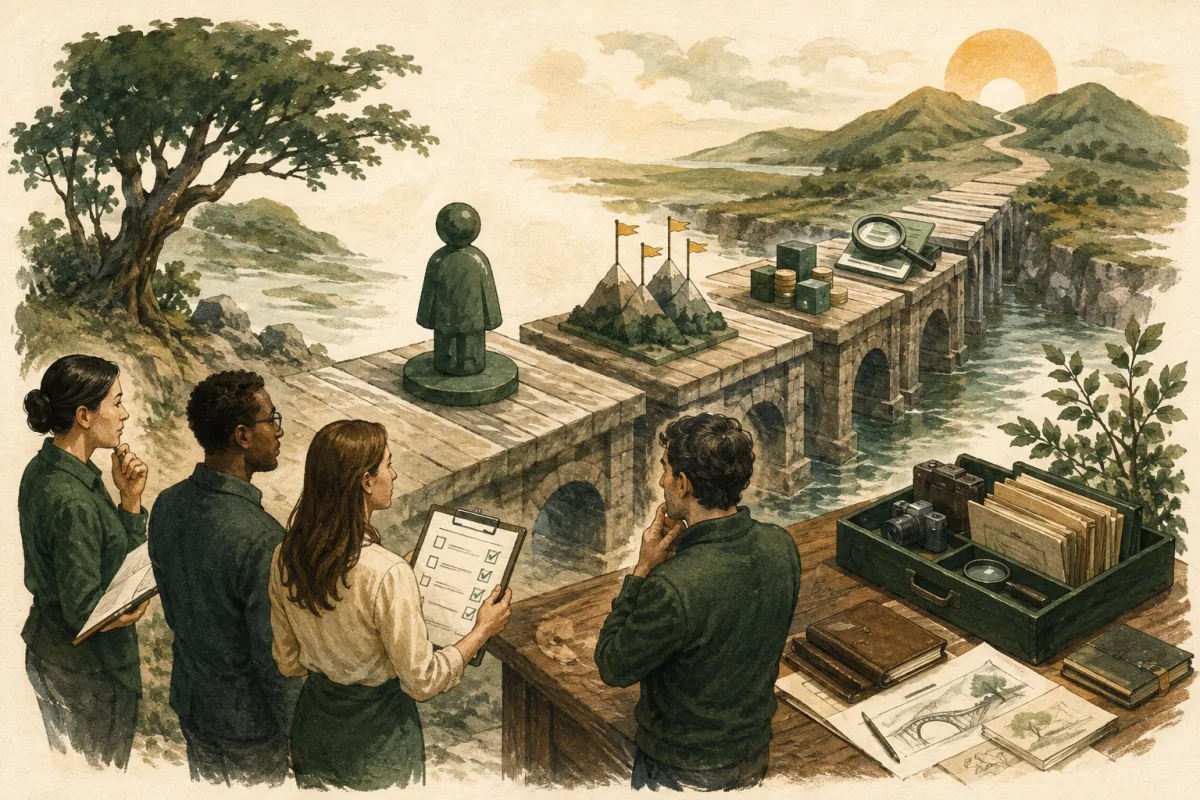
For each workstream, define the initial decision, accountable executive, operational lead, required evidence, dependencies, and next review. For example, a resilience workstream may begin with validating recovery capability before deciding whether architecture investment is needed. A leadership workstream may begin with clarifying responsibilities before launching a senior search.
Use the first operating review to test the assumptions that were made under diligence constraints. Management may gain access to better data after close or identify a simpler solution. The board should expect the plan to become more precise, while requiring a clear explanation when material priorities or funding needs change.
Define completion through an observable capability. “Document the architecture” is an activity. “Two authorised internal operators can explain and run the critical recovery process using current documentation” is a more meaningful condition. The exact test depends on the workstream, but it should connect the investment to an improvement the organisation can sustain.
Questions investors and founders often ask
Is technical due diligence the same as a code audit?
No. A code audit examines software implementation within an agreed scope. Technical due diligence connects product, architecture, organisation, security, economics, and other relevant evidence to a transaction decision. A code review may be one input, particularly where a specific implementation claim matters to the thesis.
How long should technical due diligence take?
The schedule depends on the transaction questions, access, system complexity, and specialist work required. Agree an initial evidence review and escalation points rather than treating one advertised duration as universal. If the deadline prevents a material question from being answered, the report should preserve that limitation for the decision-maker.
Does a red finding mean the buyer should walk away?
A technical rating does not determine the commercial decision by itself. Assess the condition, impact, uncertainty, mitigation options, and relationship to the thesis. The transaction team decides how that evidence affects price, structure, timing, or whether to proceed. The assessor should make the consequences understandable without substituting for those decision owners.
Can the same firm perform diligence and remediation?
It can, but the commercial interest should be disclosed and managed. Require findings that stand on their own evidence, credible alternatives, and a clear separation between assessment conclusions and implementation sales. For a consequential recommendation, an independent review of the assumptions may be useful before committing to the same firm's proposed programme.
Choose the right diligence leader
Select for relevant transactions and operating evidence, not a universal “technology expert” label.
Ask candidates to show:
- how they translate a thesis into questions;
- when they would use a specialist;
- a finding they downgraded after new evidence;
- a risk they escalated despite management confidence;
- how they separate fact, inference, and unknown;
- how their work changed a transaction or 100-day plan;
- how they manage implementation conflicts;
- references from both investors and management teams.
Good diligence reduces two errors: paying for an unverified technology story and discounting a sound business because an assessor mistook unfamiliarity for failure. The standard is not perfection. It is decision-grade evidence.
Use the code audit services guide to specify implementation review scope, evidence, findings and retest alongside the wider transaction assessment.
When the buyer is planning ownership after an acquisition, the CTO guide for private equity connects technical findings with operating responsibility, priorities and transition planning. Due-diligence evidence should inform that plan without being treated as a guarantee of future performance.
Practical next step
Use the technical due-diligence evidence checklist to record findings, source references, unknowns, decision consequences and follow-up owners. An unanswered question should remain visible rather than being treated as a passed check.
Frequently asked questions
What is technical due diligence?
Technical due diligence is an evidence-led assessment of how product, platform, security, data, organization, delivery, and technology economics affect a transaction thesis and post-close plan.
How long does software technical due diligence take?
Timing ranges from a focused review over days to a multi-week assessment. Scope should follow material transaction questions, access, company complexity, and evidence quality rather than a standard checklist.
Does technical diligence include source-code review?
Sometimes. Repository analysis can test specific questions about maintainability, security, ownership, or delivery, but code alone cannot explain product fit, operating capability, data rights, reliability, or organization risk.
Should the diligence provider also sell remediation?
They may, but the incentive must be disclosed. Preserve a clear assessment standard, evidence trail, alternative options, and buyer control so findings are not inflated to create implementation work.
Sources and further reading
Turn research into a mandate
See the cost and hiring model before you shortlist.
Use the free calculator, then save a candidate search or post a transparent role when the mandate is ready.