
Technology leadership diagnostics
Technical Founder Left: Continuity and the Next Hire
Manage a technical cofounder departure with an evidence register, handover checks, customer continuity, team communication and a replacement leadership brief.
- By
- Fractional CTO Experts
- Published
- 2026-07-30
- Reviewed
- 2026-09-07
- Reading time
- 13 minutes

When a technical founder leaves, the company loses more than a job title. Product assumptions, architecture rationale, customer promises, source and vendor control, hiring judgment, and informal authority may all be concentrated in that relationship.
The response should separate respectful founder transition from company continuity. Establish control without creating suspicion, support the team without offering false certainty, recover company-owned knowledge, and choose the next technology seat from the work ahead.
- Establish a lawful, respectful transition
- Secure continuity without password sharing
- Recover the founder-dependency map
- Stabilize the team with truth and authority
- Protect product and customer continuity
- Choose the next seat from the company condition
- Select a temporary leader carefully
- A 45-day continuity plan
- Distinguish founder departure from ordinary executive succession
- Build a transition register with evidence of control
- Recover decisions through concrete examples
- Worked example: a founder leaves during an enterprise pilot
- Test continuity with a rehearsal rather than a presentation
- Communicate what is known without promising certainty
- Design the replacement mandate before starting the search
- Questions about replacing a technical cofounder
- Rebuild company-owned capability
Establish a lawful, respectful transition
Founders, boards, and counsel should handle equity, governance, intellectual property, confidentiality, employment, access, and communications according to the company’s agreements and jurisdiction. Technology leaders should not improvise legal conclusions.
Operationally, confirm:
- effective transition date and available handover;
- company ownership of source, domains, data, infrastructure, devices, and vendor accounts;
- current production and security issues;
- pending technical and product decisions;
- releases, customer commitments, and fundraising claims;
- who can approve and respond after departure.
Do not share allegations or private terms with the team. Do not destroy access history or evidence in a rush to clean up accounts.
Secure continuity without password sharing

Inventory and transfer administrative control through company identity:
- source repositories and package registries;
- cloud, hosting, DNS, email, and certificates;
- app stores, analytics, monitoring, and support;
- databases, backups, keys, and secrets;
- payment, messaging, identity, and other critical vendors;
- hardware, build, deployment, and recovery systems.
Rotate credentials where appropriate, remove personal recovery methods, preserve logs, and assign least-privilege roles. Avoid one shared “founder password” that creates a new silo. Document how an authorized person obtains urgent access.
Recover the founder-dependency map
The most important context may not appear in the repository.
Map:
Customers: promises, special workflows, integrations, pilots, support expectations, and relationships.
Architecture: current design, critical dependencies, known limits, discarded options, data, security, and operational failure modes.
Roadmap: product assumptions, technical sequencing, hiring dependencies, and decisions awaiting evidence.
Operations: deployment, incident response, vendors, finance-related processes, compliance work, and routine manual actions.
Ask team members, operators, founders, customers, and vendors what they depended on the person to decide or explain. Label facts, recollections, and uncertainties separately. The objective is not to reconstruct every thought; it is to make business-critical choices possible again.
Stabilize the team with truth and authority
The team needs:
- a factual leadership update;
- temporary product, technical, people, and incident owners;
- protected priorities for the next few weeks;
- clarity about what stops;
- private space for managers to discuss workload and retention;
- a date for the next update.
Do not ask the most senior engineer to become acting CTO while retaining a full delivery load. If someone accepts temporary authority, remove conflicting responsibilities, define support, and set a review date. Do not use retention bonuses or title changes as substitutes for fixing unsafe workload and ambiguity.
Protect product and customer continuity
Review the next releases and commitments against available context. Narrow work that depends on unverified assumptions. Communicate early where a customer deadline or capability must change.
Maintain:
- support and incident response;
- current production and security visibility;
- the smallest roadmap capable of preserving customer value;
- a decision log for temporary choices;
- evidence for investor and board communication.
Avoid a panic rewrite. The product may contain founder-shaped decisions, but replacement during a continuity event increases risk unless a specific condition demands it.
Choose the next seat from the company condition
Consider:
Technical co-founder: appropriate when core technology invention, permanent product ownership, founder-level capital risk, and company-building commitment remain essential.
Technical lead or VP Engineering: appropriate when strategy is clear and the continuous need is hands-on engineering and organization execution.
Fractional CTO: appropriate for bounded recurring executive decisions when an internal team can execute and the next company shape remains uncertain.
Interim CTO: appropriate when the company needs concentrated seat ownership through the departure, fundraising, turnaround, or permanent search.
Permanent CTO: appropriate when product, team, customer, platform, board, and risk demands are continuous and the company can support the seat.
The answer can be sequenced: interim cover, a permanent search, and specialist support. The title should follow the mandate, not the cap-table history.
Select a temporary leader carefully
Ask candidates for evidence from founder or executive transitions. Test whether they can establish authority without disrespecting the product’s history, support existing leaders, make decisions under uncertainty, communicate externally, and hand over cleanly.
Verify:
- direct ownership in a comparable event;
- technical and product judgment;
- people and founder-conflict experience;
- ordinary and urgent capacity;
- references;
- current portfolio conflicts;
- approach to permanent-seat design.
The interim CTO guide explains the concentrated model. The advisor versus fractional CTO guide helps when daily operating ownership already exists.
A 45-day continuity plan
Days 1–3: secure control, preserve evidence, name temporary owners, and communicate with the team.
Days 4–10: map founder dependencies, customer commitments, risks, and decision gaps. Stop unsafe or context-heavy work.
Days 11–25: stabilize delivery and operations, transfer knowledge through real work, and choose the temporary leadership model.
Days 26–45: approve the next-seat mandate, begin the search or internal transition, and create onboarding evidence.
Timelines must reflect legal process, product risk, and available handover. The sequence matters more than a universal day count.
Distinguish founder departure from ordinary executive succession
A technical founder may simultaneously be the architect, product inventor, principal salesperson for technical buyers and informal final authority for the engineering team. Replacing the CTO title does not necessarily replace those functions. Begin by identifying which responsibilities the company actually depended on, including work that never appeared in a formal job description.
For each responsibility, name the next decision owner and the person who will perform the work. Those may be different people. The CEO might own a customer commitment while a technical lead investigates whether the platform can support it. A temporary CTO might approve an architecture direction while an engineering manager coordinates delivery. Writing down this separation prevents every question from accumulating with the most experienced remaining engineer.
Also distinguish an operational dependency from a relationship dependency. Someone may know how to run a deployment, yet lack the trust required to renegotiate a promise with a strategic customer. Conversely, the CEO may retain the customer relationship while lacking evidence about what was promised. Recovery needs both technical records and commercial context.
Build a transition register with evidence of control
A transition register should answer more than whether an account exists. It should identify what the service does, which company identity controls it, who can perform urgent actions, what proof has been checked and what remains uncertain. Store sensitive credentials in the approved secrets system; the register should link to an authorised access procedure rather than contain passwords.
| Capability | Proof to request | Owner's next action |
|---|---|---|
| Build the application | Successful build from a clean documented setup | Resolve missing packages or private dependencies |
| Release a change | Deployment rehearsal and rollback instructions | Confirm approval and incident escalation |
| Restore customer data | Recent recovery evidence in an isolated environment | Investigate gaps without altering live records |
| Manage a critical vendor | Company administrator and billing contact verified | Replace personal recovery details where appropriate |
| Explain a customer exception | Approved requirement and current implementation identified | Reconfirm any unresolved commercial promise |
Prioritise capabilities by the effect of losing them. A forgotten analytics dashboard may be inconvenient; losing the only route to renew a production certificate can threaten service continuity. Review critical items daily during the initial transition and less urgent items on a scheduled cadence. Use explicit status labels such as verified, reported but untested, blocked and no longer required.
Do not let a spreadsheet become a substitute for verification. A departing founder may accurately remember a process that has since changed. A remaining engineer may believe a backup is usable without having restored it. Assign an appropriate rehearsal and record its date, environment and result so the next leader knows what the evidence actually establishes.
Recover decisions through concrete examples
Asking a founder to document everything is usually an unmanageable request. Ask them to walk through a recent customer onboarding, an unusual support issue, a difficult release and a major architecture choice. Specific events help reveal hidden rules and dependencies that an abstract system overview can miss.

During each walkthrough, ask what alternatives were considered, why the chosen approach was acceptable at the time, which assumptions may no longer hold and what would trigger reconsideration. Separate a necessary constraint from a historical convenience. For example, a manual approval step may protect against a real contractual restriction, or it may simply reflect a temporary staffing shortage from an earlier stage.
Record uncertainty honestly. If the founder recalls that a large customer requested a feature but cannot locate the commitment, label the statement as a recollection and assign a follow-up. Do not silently promote it into a contractual requirement. Equally, avoid deleting an unfamiliar exception merely because it looks untidy in the code.
Where recording is agreed and appropriate, preserve the walkthrough with a short index of the decisions discussed. Written summaries should identify the relevant repositories, services and customer records. A searchable decision note is often more useful during an incident than a long recording without timestamps or context.
Worked example: a founder leaves during an enterprise pilot
Consider an illustrative startup whose technical cofounder leaves while an enterprise customer is evaluating a new integration. The product is running, but the founder personally maintained the integration credentials and told the customer that an additional reporting feature would be ready before the pilot review. The engineering team knows the integration exists but has never owned its support.
The first action is to identify an authorised company owner for the integration and verify access through the provider's normal process. The team checks what data moves, which failures are visible and who receives alerts. The CEO reviews the customer's written commitments and speaks with the account owner to resolve the reporting expectation. These are parallel responsibilities with a shared status record.
The temporary technology lead then separates essential continuity from optional pilot expansion. If reporting is not yet implemented, the company should explain the actual state and agree a credible next step. It should not represent a prototype as production-ready merely to reassure the customer. Any temporary manual process needs a named operator, clear limits and a review date.
Before the pilot review, a second engineer rehearses a support scenario and explains the integration's failure behavior. The company can then report specific progress: access transferred, support assigned, a known limitation documented and the remaining delivery plan agreed. This example is a planning scenario, not a claim about a client engagement or guaranteed recovery outcome.
Test continuity with a rehearsal rather than a presentation
Choose a small set of realistic operating tasks: diagnose a failed job, locate the owner of a customer integration, deploy a reversible change or restore representative data into an isolated environment. Ask the receiving team to perform the tasks using the available documentation. Keep the departing founder available as an observer where that arrangement is possible.
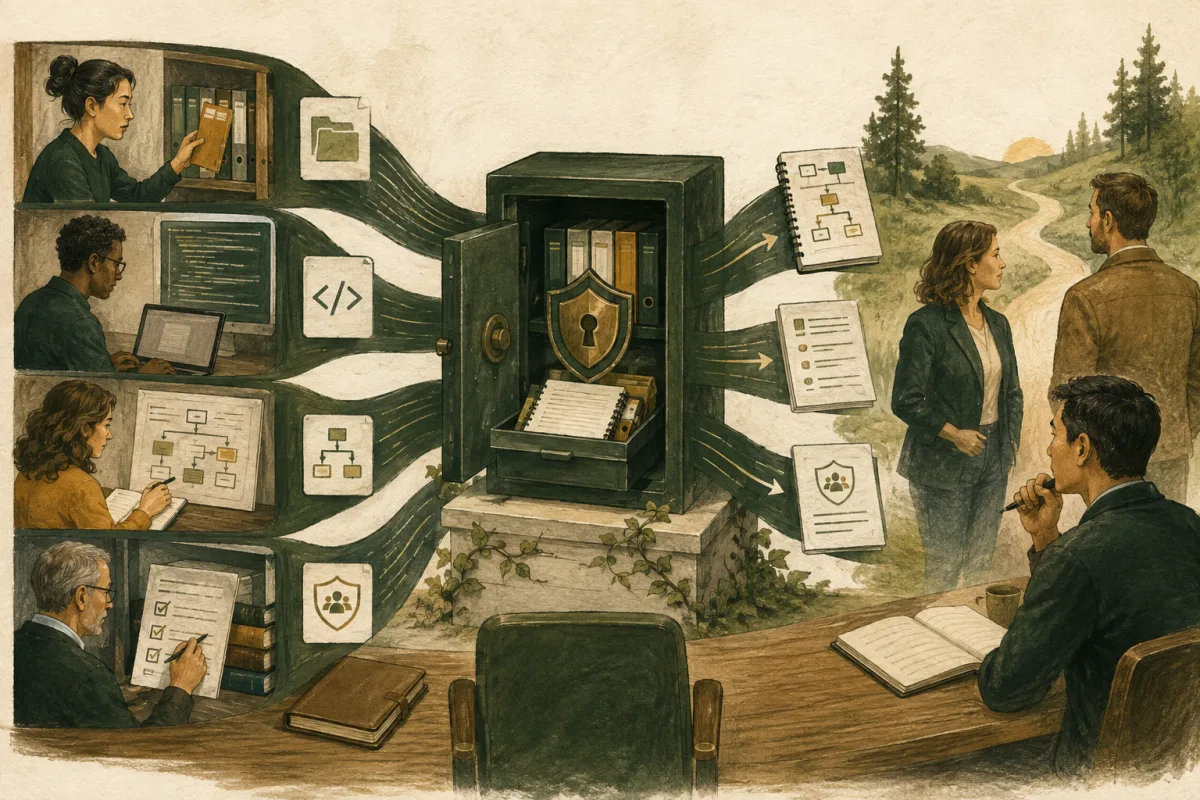
The observer should note where the team becomes blocked and what information resolves the problem. The purpose is to improve the handover, not embarrass the recipient. Update instructions after the exercise, then repeat the uncertain portion with a different person. A successful demonstration by the original founder proves their capability; a successful rehearsal by the receiving team provides evidence of transfer.
Google's SRE workbook discussion of on-call training describes practical exercises, shadowing and explicit escalation as part of preparing new operators. A startup can adapt those principles to its smaller system without copying Google's staffing model or assuming the same timelines. The useful question is whether the next person can recognise a problem and safely obtain help.
Keep rehearsals proportionate to the risk. Do not deliberately disrupt production merely to prove readiness when an isolated exercise can answer the question. Record the limits: a successful staging rollback, for example, does not automatically prove that every production data migration is reversible.
Communicate what is known without promising certainty
The first team update should explain who now owns decisions, which near-term priorities remain active and when more information will be available. Employees need a reliable operating plan, even when the long-term leadership choice is unsettled. Avoid speculation about personal motives or private separation terms.
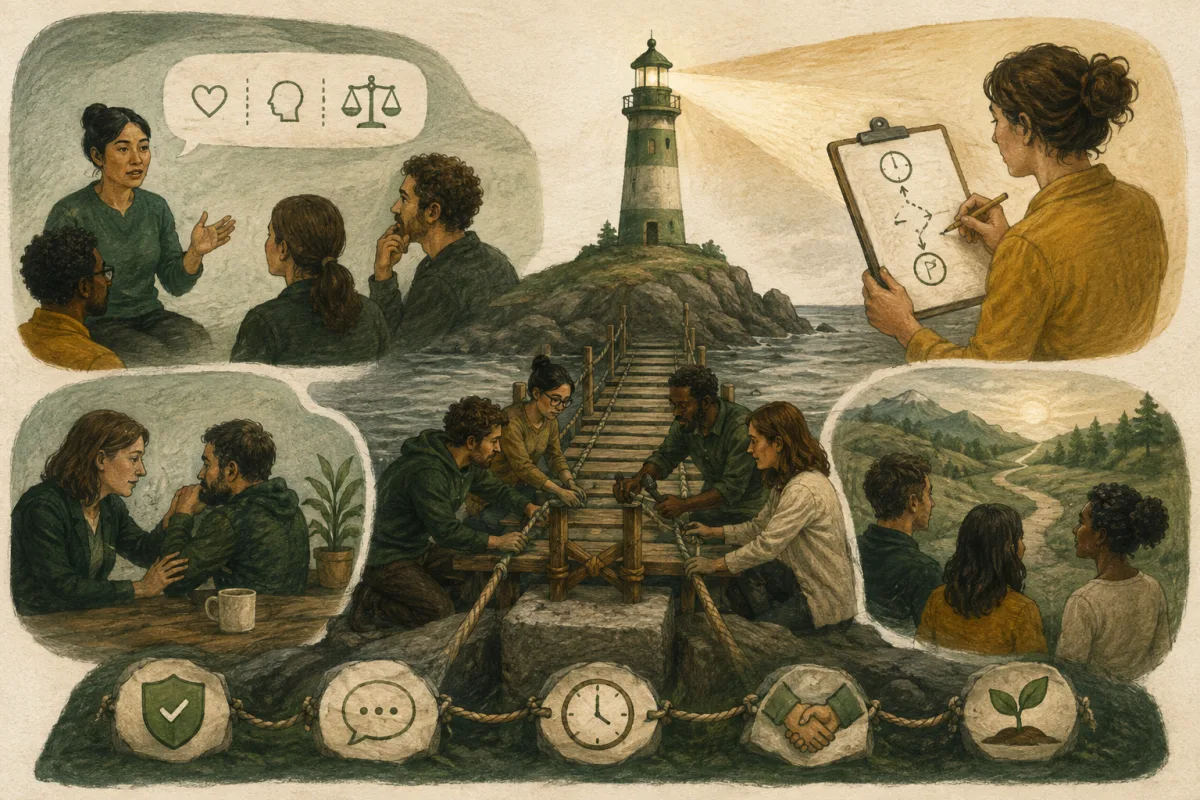
A useful message might say that a named person owns technical decisions during the transition, a named manager handles workload and staffing concerns, and a review of the next release will be completed by a stated date. That gives people somewhere to take practical questions. Invite private discussion about workload rather than expecting every concern to surface in a group meeting.
Customer communication should be based on actual relevance. A routine leadership update differs from a situation where a promised delivery or support arrangement is affected. Coordinate the message with the accountable commercial owner and the company's advisers where obligations require it. Do not make blanket assurances that nothing changes before the continuity review is complete.
For board and investor updates, separate confirmed facts, material uncertainties and decisions requiring approval. A short register of the highest-priority dependencies can make the discussion more useful than an optimistic narrative. State what has been verified since the previous update and what evidence will support the next decision.
Design the replacement mandate before starting the search
Write the next six months of work before writing the vacancy title. Does the company need someone to discover the product, operate a growing engineering organisation, stabilise a platform, support fundraising or manage a complex customer implementation? Rank these needs and identify which require continuous availability.

A founder who wrote most of the code may leave a hands-on engineering gap as well as an executive gap. Hiring a fractional CTO for two days a week will not automatically supply the development capacity required to replace that work. The mandate may need a senior engineer and temporary executive support, or a full-time technical leader with a different remit from the original founder.
Use evidence-based interview scenarios. Ask a candidate to prioritise an anonymised transition register, explain how they would handle an undocumented customer promise and describe what they would verify before approving a major rewrite. Evaluate how they handle uncertainty and seek information, not only how confidently they present a solution.
Agree the handover expectation for the temporary leader too. Their engagement should leave documented decisions, internal ownership and a realistic permanent-role brief. Otherwise the company risks replacing one dependency with another, even if the new relationship initially feels more structured.
Questions about replacing a technical cofounder
What if the founder is unavailable for handover?
Reconstruct the operating picture from repositories, deployment records, support history, authorised vendor contacts and interviews with the remaining team. Mark assumptions and test critical capabilities. Prioritise safe operation and current customer commitments before attempting a complete history of the product. Use the CTO departure guide for an immediate continuity checklist.
Should all development stop?
Pause work whose safety or purpose cannot be assessed with the available context. Continue well-understood maintenance and customer support under clear ownership. A blanket freeze may create its own risks, including delayed security updates or unresolved customer incidents. Review the work item by item and document the temporary boundary.
Can the departing founder stay as an adviser?
An advisory arrangement can preserve useful context if the parties agree on availability, scope and decision authority. It should not leave the team unsure whether the adviser or the new leader makes final operating decisions. Define how questions are routed and how the company will reduce its reliance on that support over time. Commercial and legal terms require the appropriate review.
When is the transition complete?
The operational transition is substantially complete when authorised company personnel can operate the critical systems, make the necessary decisions, support customers and explain the principal risks without informal dependence on the departing founder. Legal separation and equity matters may follow a different process. Track the two streams separately so a signed document is not mistaken for technical readiness.
Rebuild company-owned capability
The recovery should leave:
- company-controlled access and repositories;
- a current system and dependency map;
- customer and product decision context;
- operating and incident runbooks;
- a smaller, evidence-backed roadmap;
- clear team authority;
- a next-seat scorecard and onboarding plan.
The company has recovered when its technology can be understood, changed, operated, and led without relying on the founder’s continued informal presence. Replacing the person is only one part of replacing the dependency.
Frequently asked questions
What should we do first if a technical co-founder leaves?
Confirm legal and respectful separation, company access, source and data ownership, incident coverage, temporary decision authority, and a truthful team message. Preserve evidence without treating departure as misconduct.
Do we need to replace the technical founder with another co-founder?
Not necessarily. Choose the next seat from product stage, technical differentiation, permanent commitment, people leadership, decision load, and capital—not the departed person’s title.
Can a fractional CTO replace a technical co-founder?
A fractional CTO can stabilize decisions, delivery, architecture, team, hiring, and transition, but cannot automatically replace founder-level product ownership, equity commitment, or permanent company-building.
What should we tell investors and customers?
Communicate material facts, continuity ownership, near-term operating plan, known risks, and the leadership process. Avoid both concealment and unsupported claims that nothing changes.
Sources and further reading
Turn research into a mandate
See the cost and hiring model before you shortlist.
Use the free calculator, then save a candidate search or post a transparent role when the mandate is ready.