
E-commerce executive leadership
E-commerce CTO and Consulting: Platforms, Checkout and Scale
Choose e-commerce CTO or consulting support for checkout, integrations, replatforming, search continuity and peak readiness. Compare scope and vendor evidence.
- By
- Fractional CTO Experts
- Published
- 2026-07-30
- Reviewed
- 2026-09-07
- Reading time
- 13 minutes

E-commerce technology leadership should protect and improve the path from customer intent to fulfilled order. Storefront performance matters, but so do catalog truth, promotions, checkout, payment, fraud, tax, inventory, fulfilment, support, analytics, privacy, and the ability to change without breaking the journey.
A fractional CTO or specialist consultant fits when these connected decisions need senior ownership but the company does not need a permanent executive seat.
- Map the revenue journey
- Prepare for peak as an operating event
- Decide whether to replatform
- Establish commerce data ownership
- Protect security and customer trust
- Model technology economics
- Hire for the actual mandate
- Decide whether you need a CTO, a consultant or a delivery agency
- Investigate conversion changes before approving a rebuild
- Worked example: payment succeeds but the customer sees an error
- Create an integration ownership register
- Preserve search visibility during a commerce migration
- Make a peak-event runbook usable under pressure
- Compare platform proposals with the same assumptions
- Questions e-commerce leaders ask
- Turn a consulting proposal into decision gates
Map the revenue journey
Start with observable customer and operating flows:
- discovery through search, advertising, marketplaces, or direct traffic;
- product understanding, availability, pricing, and promotion;
- identity, cart, checkout, payment, and fraud decisions;
- order management, inventory, fulfilment, delivery, and returns;
- support, retention, subscription, and lifecycle communication.

For each step, identify system ownership, data truth, dependencies, service expectations, failure modes, manual fallbacks, and business measures. A fast storefront that accepts orders the warehouse cannot fulfil is not a successful system.
Prepare for peak as an operating event
Peak readiness is not a load-test report. Campaigns, promotions, inventory feeds, fraud systems, payment providers, warehouses, support, and executive communication form one operating system.
Plan:
- realistic traffic and order scenarios;
- product, checkout, account, and order service levels;
- capacity and quota validation across third parties;
- cache, queue, rate-limit, and degradation behavior;
- inventory and promotion correctness;
- payment timeout and duplicate handling;
- monitoring based on customer impact;
- incident authority and communication;
- rollback and manual operations;
- change freeze and exception process;
- post-event reconciliation.
Rehearse dependency failure, not only volume. An identity provider, tax service, search engine, fraud tool, or warehouse integration may constrain revenue before compute capacity does.
Decide whether to replatform
Replatforming is a major business change disguised as a software project. Before approving it, state the constraint:
- unacceptable total platform cost;
- inability to support required markets or channels;
- release and customization bottlenecks;
- reliability or security exposure;
- poor integration or data ownership;
- vendor roadmap mismatch;
- team capability and hiring difficulty;
- merger or business-model change.
Test whether configuration, extension cleanup, process change, selective replacement, or improved ownership can solve the problem. If replacement remains justified, model:
- expected incremental contribution;
- migration and dual-run cost;
- search and analytics continuity;
- catalog, customer, order, and content migration;
- integrations and operating processes;
- organizational learning;
- launch and rollback;
- post-launch optimization;
- opportunity cost of roadmap pause.
Do not promise a conversion uplift as if platform choice alone causes it. Use ranges, assumptions, controlled tests, and a plan to separate migration effects.
Establish commerce data ownership
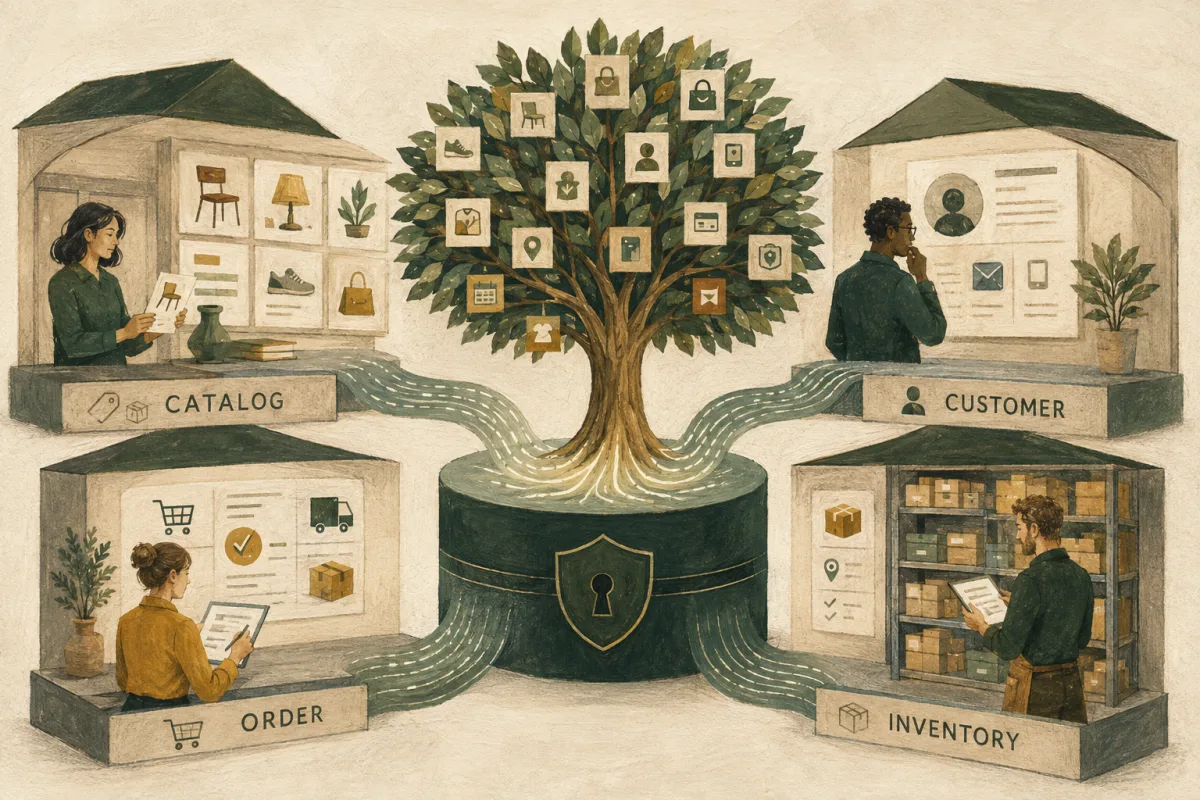
Commerce businesses often have competing truths across store, ERP, warehouse, CRM, payment, subscription, support, and analytics systems.
Clarify authoritative sources and reconciliation for:
- products, variants, attributes, and content;
- price, discount, promotion, and tax;
- customer identity, consent, and preferences;
- cart and checkout state;
- payment and refund;
- order and fulfilment;
- inventory and availability;
- returns and support;
- marketing attribution and performance.
The goal is not one database. It is clear meaning, ownership, flows, exceptions, and evidence. Executives should know which reports can support capital and inventory decisions.
Protect security and customer trust
Payment standards are only one part of commerce security. Identity, account takeover, promotion abuse, third parties, support access, privacy, credentials, change control, and incident response matter.
The CTO should work with qualified security, privacy, legal, and compliance specialists. They should ensure requirements become operating controls with owners and evidence. Outsourcing payment handling can reduce some exposure; it does not outsource responsibility for integrations and customer experience.
Model technology economics
Compare:
- platform, payment, marketplace, app, and vendor fees;
- cloud, observability, security, and data cost;
- implementation and support effort;
- revenue lost during incidents or slow change;
- gross-margin effect of fulfilment and returns;
- internal and external team capacity;
- migration and exit exposure;
- opportunity value of faster experiments or new markets.
Avoid optimizing infrastructure pennies while conversion, returns, support, or vendor fees dominate. Avoid approving every growth tool without ownership and measured incrementality.
Hire for the actual mandate
Ask candidates to reconstruct:
- a replatform decision they declined or changed;
- a peak event and dependency failure;
- a checkout correctness issue;
- conflicting inventory or order data;
- an integration strategy under vendor constraints;
- technology cost connected to contribution margin;
- a security or fraud trade-off;
- how internal ownership changed after consulting.
References should include commercial and operations leaders, not only developers.
A 90-day mandate may produce a revenue-journey risk map, peak plan, platform decision, data ownership model, investment roadmap, vendor review, engineering priorities, and permanent leadership recommendation.
The best commerce technology strategy improves the customer and operating system together. It does not confuse a new platform with a new business.
Decide whether you need a CTO, a consultant or a delivery agency
An e-commerce consultant can diagnose a specific problem, compare options and recommend a course of action. A delivery agency builds or configures the chosen solution. A fractional CTO provides recurring senior ownership across connected technology decisions, including the work of internal teams and external suppliers. One provider may offer several services, but the buyer should understand which responsibility is being purchased.
Choose a bounded consulting engagement when the question is specific: whether to replace an order-management integration, how to investigate a checkout failure or which platform options deserve evaluation. Choose recurring technology leadership when several decisions must stay aligned over time and nobody internally owns the overall direction.
An agency can be effective when the brief, acceptance criteria and operating ownership are clear. The problem arises when implementation begins before the business has agreed what must improve or who will judge the result. Ask whether the provider can recommend retaining the current platform and whether that recommendation would affect its commercial interests.
For a mid-market brand, revenue alone is an incomplete guide to the leadership model. A business with several channels, warehouses and international workflows may have more coordination complexity than a larger brand using a simpler operating arrangement. Define the mandate from those dependencies and the capacity of the existing team.
Investigate conversion changes before approving a rebuild
A decline in conversion can have several causes. Traffic quality, product availability, pricing, promotions, delivery promises, checkout behavior and measurement changes can all affect the observed rate. Segment the problem before attributing it to the storefront platform.
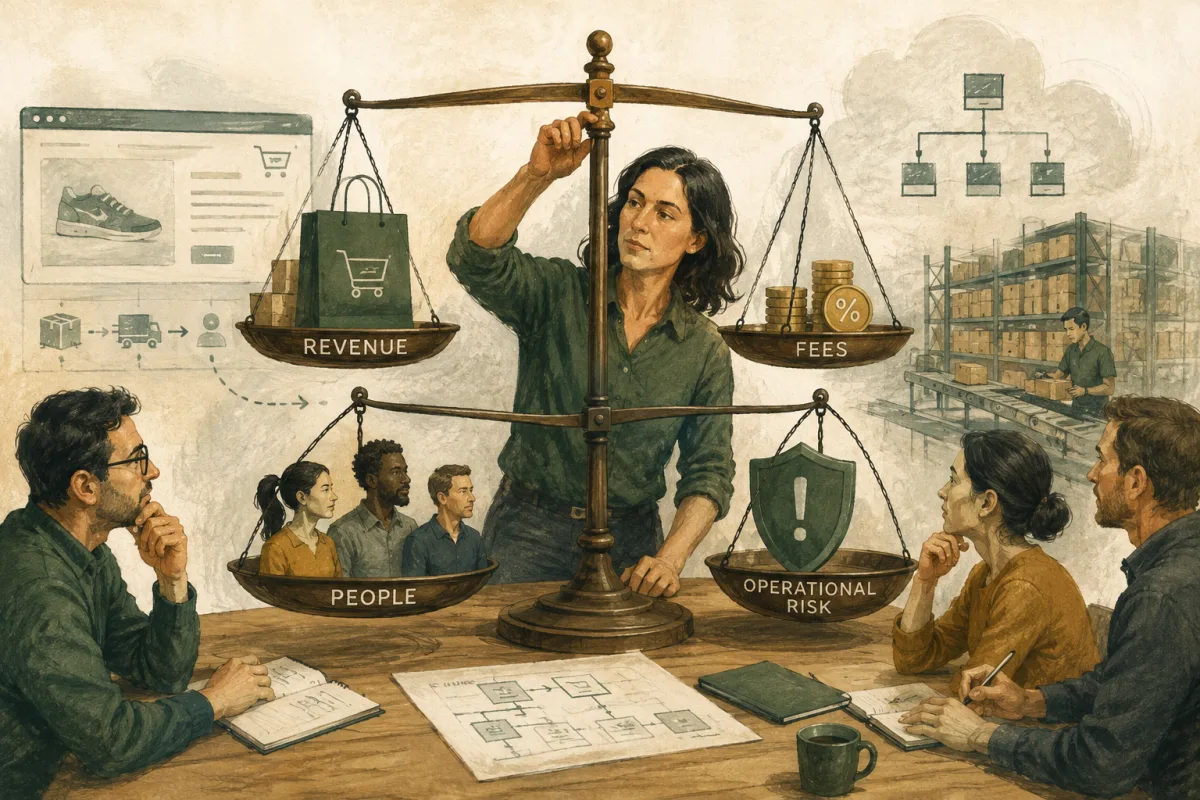
Compare like-for-like periods and customer groups where possible. Review device, channel, landing page, product category, new versus returning customers and the steps at which customers leave. Check whether tracking changed at the same time. If the denominator now includes traffic previously excluded, the reported conversion rate may move without an equivalent change in customer behavior.
Inspect the customer journey directly. A technical review might find a slow product image, an unavailable variant, an unexpected shipping charge or an error after payment authentication. Those require different remedies. A new platform may preserve the same problems if the migration carries over the same catalog rules, commercial policies and third-party integrations.
Record competing explanations and the evidence that would distinguish them. Then choose a proportionate investigation or controlled test. Avoid changing acquisition, pricing, design and platform simultaneously if the company needs to understand which intervention caused the result. Where several changes are unavoidable, describe the attribution limits honestly.
Worked example: payment succeeds but the customer sees an error
Consider an illustrative checkout in which the payment provider accepts a payment but the storefront times out before displaying confirmation. The customer retries. A poorly coordinated system may create a second payment attempt, duplicate the order or leave support unable to tell which state is correct.
The investigation should follow the transaction across the browser, application, payment provider and order system. Identify the stable reference for the intended purchase and inspect the recorded state at each boundary. Support needs a reliable way to establish whether payment was accepted and whether an order exists before advising the customer to try again.
Stripe's documentation on idempotent requests explains how an idempotency key can allow a request to be retried without repeating the intended operation under its documented behavior. A complete commerce design still needs appropriate order identity, state handling and reconciliation across the surrounding systems. One API parameter does not solve every duplicate-order scenario.
Write acceptance examples for a timeout, a repeated submission, an asynchronous payment result and a delayed order update. Agree the customer message and the support procedure for uncertain states. Reconcile the payment and order records after the event. This is a hypothetical failure example, not a claim about a particular merchant or payment provider incident.
Create an integration ownership register
Commerce integrations often fail at the boundary between suppliers. The storefront provider may consider an order sent successfully while the warehouse system rejects it. Without a shared record of responsibility, each party can report that its own component is working.
| Integration | Meaning to agree | Failure question |
|---|---|---|
| Catalog to storefront | Which system owns attributes and variant identity? | What happens when an update is incomplete? |
| Inventory to sales channels | When is stock available to promise? | How are delays and overselling detected? |
| Payment to order management | Which event establishes the relevant payment state? | How are uncertain or duplicate events reconciled? |
| Order to warehouse | What confirms acceptance for fulfilment? | Who sees rejected or stuck orders? |
| Returns to finance and support | Which state triggers refund and stock changes? | How are partial returns handled? |
For each boundary, record the owner, data contract, expected timing, retry behavior and escalation route. Include a way to identify a transaction across systems without unnecessarily exposing customer information. A support agent should not need access to every production database to understand an order's status.
Review exceptional cases rather than only the happy path. Partial fulfilment, product substitutions, address corrections and cancellations can expose assumptions that ordinary test orders miss. The register should connect to practical checks and operating instructions, not become a static architecture diagram.
Preserve search visibility during a commerce migration
A platform migration can change product URLs, category structure, internal links, canonical tags, page content and rendering. Inventory the existing URLs and their search evidence before making those changes. Include pages with traffic or external links, even when they are not prominent in the current navigation.
Google's guidance for site moves with URL changes recommends mapping old URLs to appropriate new destinations and using redirects when URLs change. Apply that mapping to equivalent products, categories and useful content. Redirecting unrelated retired pages to the homepage does not preserve their original purpose.
Test the new pages as a crawler and as a customer. Confirm that important content and links are available, indexability settings are appropriate, canonical destinations are consistent and the sitemap contains the intended URLs. Check product availability and structured data against the actual visible content rather than treating metadata as a separate marketing layer.
After launch, monitor the mapped URLs, crawl errors and search performance alongside sales and analytics continuity. A technically valid launch can still take time to settle in search. Preserve a record of what changed so the team can investigate a decline with evidence instead of assuming the new platform caused every movement.
Make a peak-event runbook usable under pressure
Start with the event's critical customer outcomes: finding the promoted products, seeing accurate stock and price, completing payment and receiving a usable order confirmation. Identify which services support each outcome and which degradation is acceptable if a dependency fails.
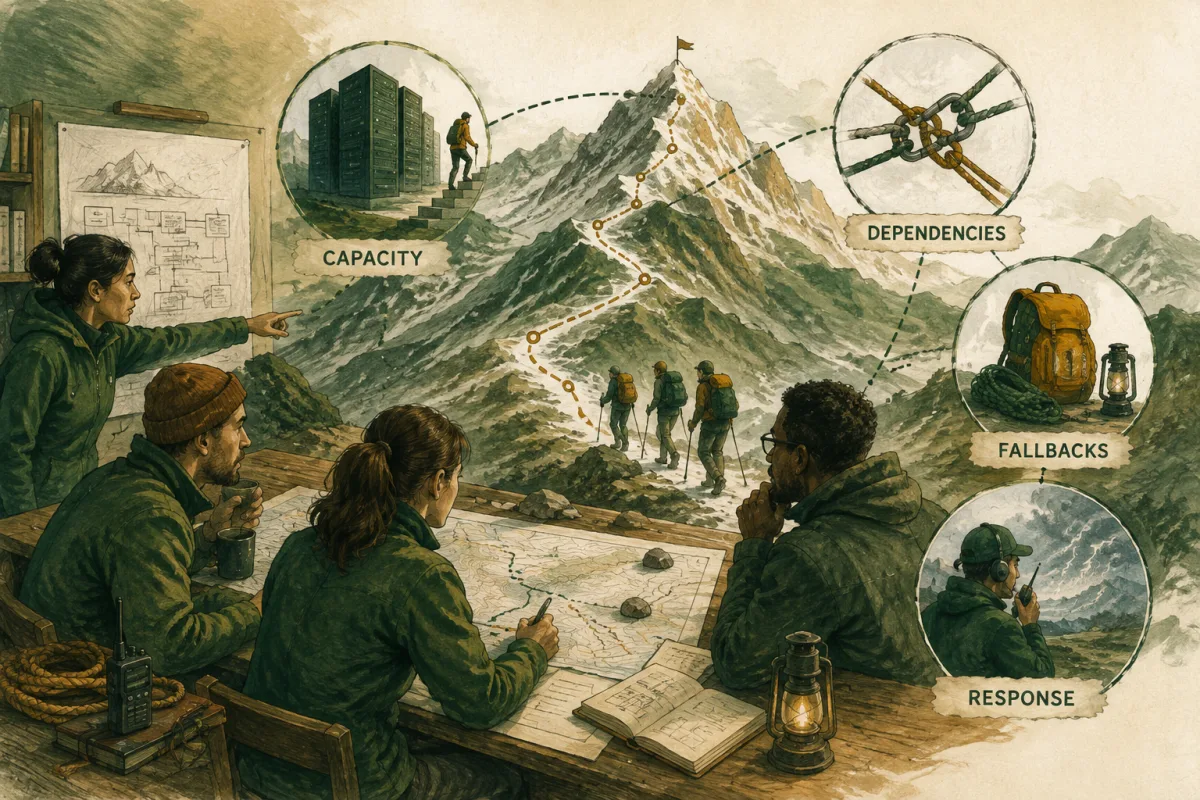
Assign named decision roles for engineering, trading, fulfilment, support and executive communication. If stock updates become unreliable, someone must be authorised to pause a promotion or change availability. If a payment dependency degrades, the team needs a safe response that does not create misleading customer messages or uncontrolled retries.
Rehearse a small number of plausible scenarios before the event. For example, simulate delayed inventory updates, a failed order export or a surge in support contacts. Record what people need to see, who decides and which communication channel remains usable. The rehearsal should reveal gaps in coordination as well as software behavior.
After the event, reconcile orders, payments and fulfilment exceptions. A successful sales dashboard can conceal customers who were charged without a completed order or orders that never reached the warehouse. Assign owners for those exceptions and incorporate the findings into the next operating cycle.
Compare platform proposals with the same assumptions
Require each proposal to address the same catalog size, markets, channels, integrations, support needs and migration scope. Otherwise a cheaper estimate may simply exclude work that another provider included. List assumptions about customer accounts, historical orders, content, redirects and reporting explicitly.
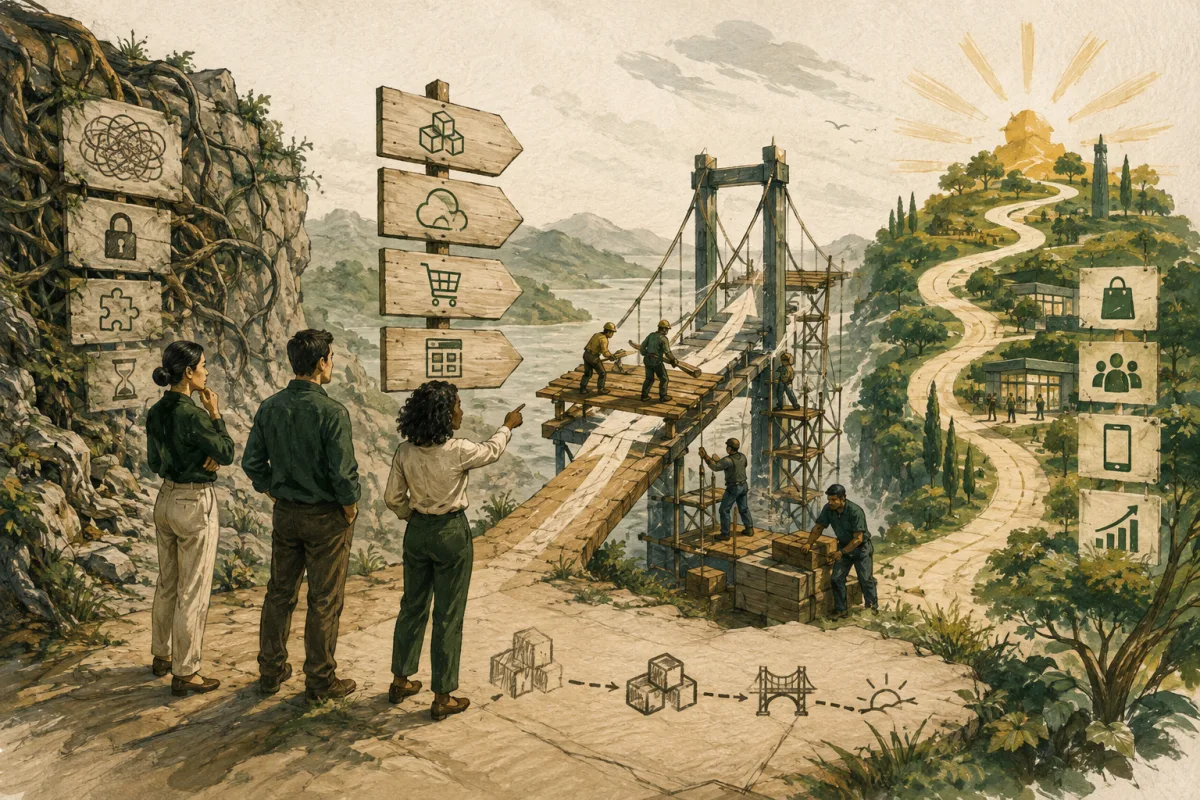
Separate one-time implementation costs from recurring platform, application and support costs. Include the internal effort required to manage vendors, operate integrations and maintain the storefront. A hosted platform may remove some infrastructure work while adding configuration, extension and commercial constraints that still need ownership.
Ask for the exit conditions. How can the company export data, move content, retain domains and transfer access? Which custom components depend on the provider's private tooling? The goal is to understand the arrangement before relying on it, not to assume every proprietary component is unacceptable.
Evaluate evidence from comparable work. A provider should explain the constraints of a relevant migration, how it verified acceptance and what changed after launch. Distinguish a visually attractive portfolio from demonstrated experience with the operational complexity your business faces.
Questions e-commerce leaders ask
When should an e-commerce business hire a fractional CTO?
When connected technology decisions repeatedly exceed the ownership or experience available internally, while the recurring executive workload still fits part-time capacity. Common triggers include a major migration, repeated integration failures, several competing agencies or a growing gap between commercial promises and delivery. The role needs a clear mandate and people who can execute between engagements.
Is headless commerce always better for a growing brand?
No. A separate storefront architecture may support particular experience or integration needs, but it also introduces implementation and operating responsibilities. Compare the actual constraint with the simpler options available on the current platform. Choose headless architecture because the expected benefits justify its complexity for the business, not because it appears on a growth-stage checklist.
Can a CTO guarantee a conversion-rate increase?
No credible technology leader can guarantee that platform work alone will increase conversion. The result depends on customer demand, traffic, pricing, availability, experience and measurement, among other factors. A useful mandate specifies the problem to investigate, the change to test and the evidence needed to judge the outcome.
What should an e-commerce technology audit deliver?
A prioritised account of customer and operating risks, the evidence behind them, the options available and the next decisions. It should identify owners and distinguish urgent corrections from longer-term improvements. A list of tools to buy or a generic platform score is insufficient without a connection to the business's actual constraints.
Should the CTO manage the development agency?
The CTO can own technical expectations, architecture decisions and acceptance governance, while a delivery or project lead coordinates routine work. Agree the boundary. An executive engagement becomes inefficient if all capacity is consumed by chasing tickets, but the agency still needs an accountable counterpart with enough context to resolve important decisions.
What should happen in the first month?
Establish the revenue journey, inspect representative failures, identify the critical integrations and agree the first decision priorities. Verify who controls the company's systems and evidence. The first month should produce a shared understanding and a practical sequence, not an automatic commitment to replatform before the problem has been established.
Turn a consulting proposal into decision gates
An e-commerce technology proposal should not assume that audit, replatforming, implementation, and ongoing support form one unavoidable purchase. Separate them:
- diagnose the commercial and operating constraint;
- compare configuration, process, integration, selective replacement, and full-platform options;
- validate data, dependency, search, analytics, and operating assumptions;
- approve a business case and migration sequence;
- deliver in stages with measurable acceptance;
- transfer ownership and optimize from observed customer behavior.
Ask the provider to disclose platform partnerships, referral fees, implementation margins, and the revenue they expect after launch. Those models are not automatically bad, but the buyer should understand the incentive.
For attribution, establish analytics and experiment integrity before major change. Preserve comparable definitions, annotate releases and campaigns, and avoid claiming that every post-launch revenue movement came from the platform. Conversion can change because of traffic mix, price, inventory, promotion, seasonality, fulfilment, or measurement itself.
The executive’s value is making those causes discussable. A credible CTO can say “we do not know yet,” define the next evidence, and protect the business from making a permanent platform decision on a temporary symptom.
Frequently asked questions
What does an e-commerce CTO consultant do?
They connect conversion, customer experience, platforms, checkout, integrations, data, peak reliability, security, delivery capability, and vendor economics to a clear business mandate.
When should an e-commerce company replatform?
When evidence shows the current platform blocks important business outcomes and the expected benefit justifies migration cost and risk. Exhaust configuration, integration, process, and operating-model causes before assuming replacement.
How do you prepare an online store for peak traffic?
Map critical journeys and dependencies, define service and recovery goals, load-test realistic behavior, rehearse failures, confirm vendor limits, freeze risky changes deliberately, staff incident response, and validate fallbacks.
How should e-commerce technology ROI be measured?
Measure incremental contribution and risk-adjusted operating impact: conversion, margin, support and fulfilment cost, change speed, platform fees, reliability, team capacity, and migration or failure exposure.
Sources and further reading
Turn research into a mandate
See the cost and hiring model before you shortlist.
Use the free calculator, then save a candidate search or post a transparent role when the mandate is ready.