Technology leadership diagnostics
Legacy System Modernization: Decisions and Migration
Plan legacy modernization around business outcomes: compare repair and replacement, manage coexistence, reconcile data, test workflows and retire safely.
- By
- Fractional CTO Experts
- Published
- 2026-07-30
- Reviewed
- 2026-09-07
- Reading time
- 13 minutes
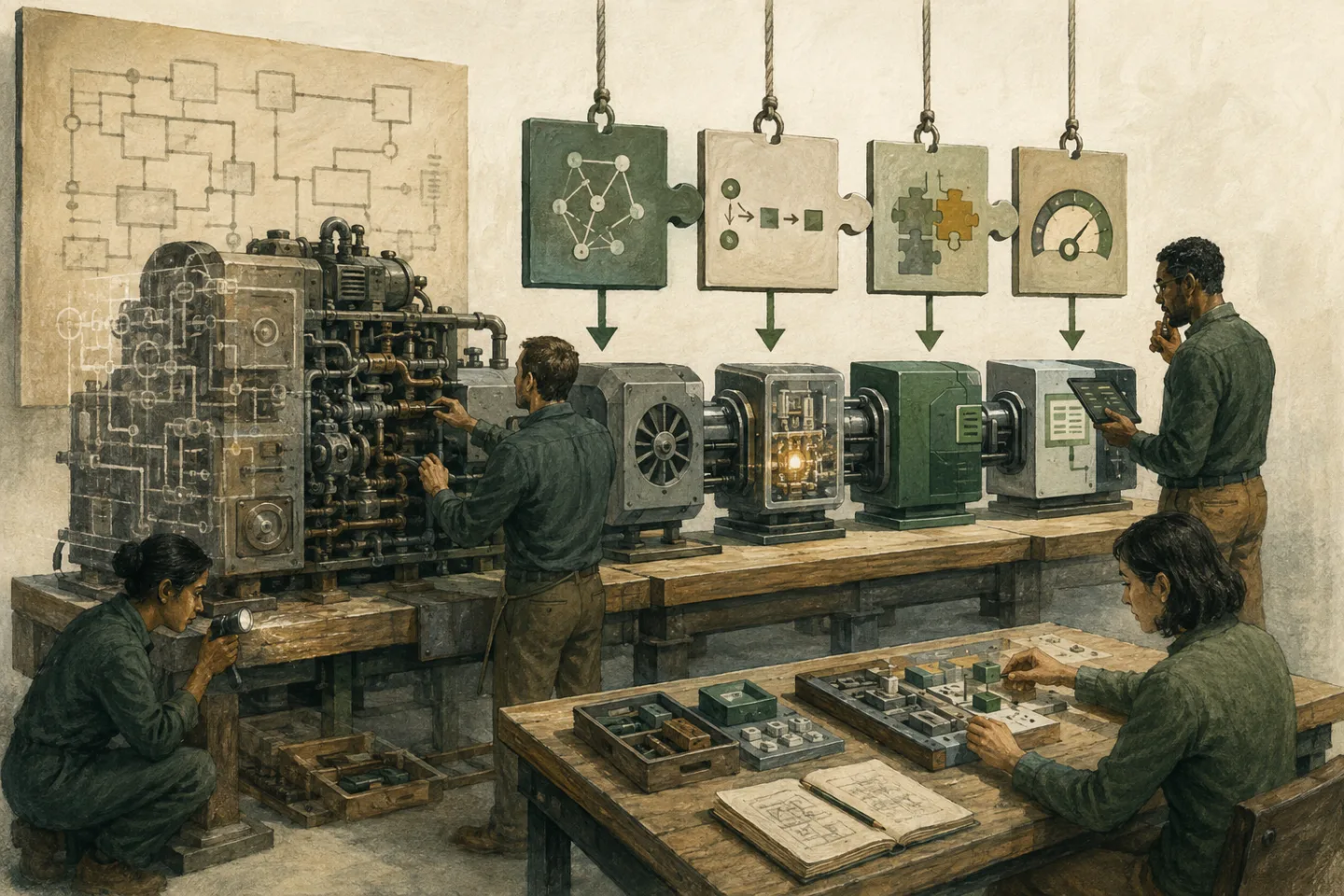
Legacy system modernization should change a business constraint without losing the rules, data, and operating knowledge that keep the company functioning. Replacing old technology is not the outcome. The outcome may be safer change, faster onboarding, lower operating risk, a new product capability, stronger security, better data, or less dependency on scarce expertise.
Modernization fails when the program begins with a target technology and treats the existing system as an implementation mistake. Legacy systems often contain years of customer exceptions, regulatory interpretations, financial controls, and operational workarounds that are invisible in code diagrams.
- Define the business decision
- Discover the system behind the software
- Compare options, not slogans
- Create a safe seam
- Treat data as a separate transition product
- Preserve operational continuity
- Govern vendors and incentives
- A CTO-led first 90 days
- Decide what must change and what should be preserved
- Worked example: modernizing customer onboarding
- Understand incremental replacement without treating it as a universal rule
- Build a decision record for repair, replacement or retirement
- Plan for the period when two systems exist
- Test business behavior as well as software components
- Make the economics visible beyond the build estimate
- Retire the old component deliberately
- Questions leaders ask about legacy modernization
- Define done as company capability
Define the business decision
Write the constraint in business terms:
- a critical change takes too long or fails too often;
- a platform or runtime is no longer supportable;
- security or recovery risk is unacceptable;
- customer growth exposes performance or operational limits;
- data cannot be trusted or used across the business;
- vendor concentration removes commercial leverage;
- acquisition or carve-out requires separation;
- scarce knowledge creates continuity risk.
Then define acceptance. “Move to the cloud” is an activity. “Operators can onboard a customer without a developer, while all account changes are auditable and reversible” is a capability.
Discover the system behind the software
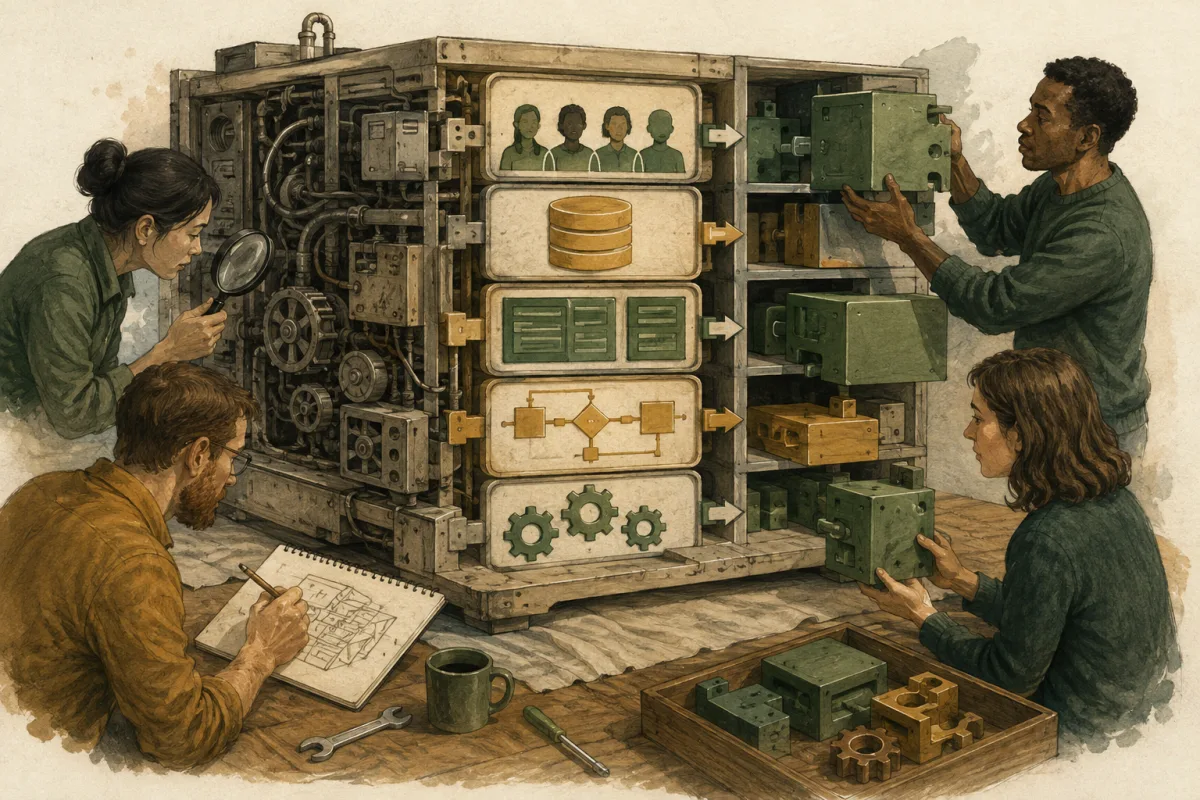
Map:
Users and work: who uses the system, the decisions it supports, manual steps, peak periods, and exceptions.
Data: authoritative sources, ownership, quality, retention, lineage, reconciliation, and reporting dependencies.
Interfaces: applications, files, APIs, devices, identity, vendors, and informal exports.
Rules: pricing, eligibility, permissions, sequence, compliance, and historical exceptions.
Operations: deployment, monitoring, backup, recovery, incident response, support, and access.
Economics: licenses, infrastructure, people, vendors, delayed change, failures, and opportunity cost.
Interview operators, support, finance, customers, and engineers. Observe real work. Code inspection alone will miss rules that live in spreadsheets, inboxes, scheduled tasks, vendor portals, or a long-serving employee’s memory.
Compare options, not slogans
Modernization is not a binary choice between “leave it” and “rewrite it.”
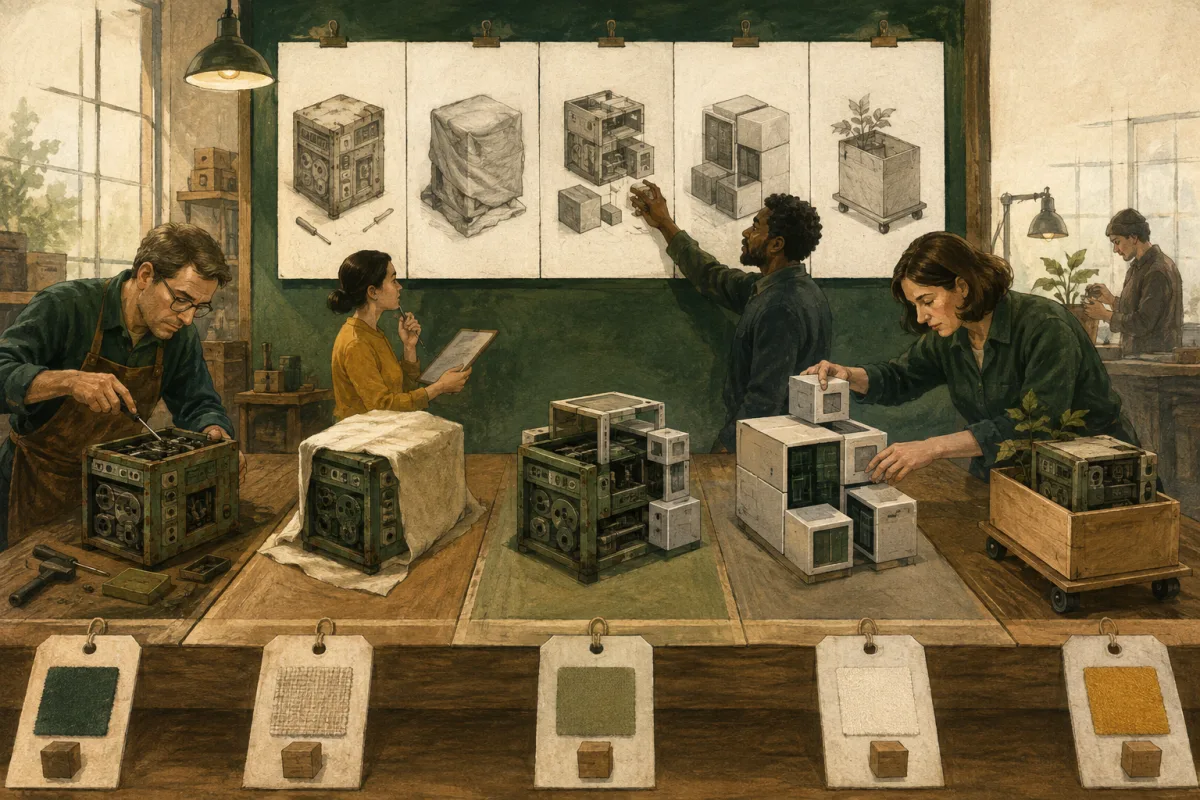
Possible moves include:
- repair: remove a specific reliability, security, or change bottleneck;
- wrap: create a stable interface around a difficult component;
- rehost or replatform: change the operating environment with limited product change;
- replace: buy or build a different capability;
- incrementally rewrite: move bounded functions behind new seams;
- retire: remove a process, product, or duplicate source of truth.
Score options against business capability, transition risk, data continuity, time to evidence, operating cost, team capability, reversibility, and vendor dependency. A new stack does not automatically improve ownership or delivery. A purchased platform can exchange code risk for workflow, contract, or integration risk.
Create a safe seam
Large programs become safer when the team can observe and change one boundary at a time.
A useful sequence is:
- Observe: add enough logging, metrics, reconciliation, and user evidence to understand current behavior.
- Isolate: define an interface or process boundary with clear ownership.
- Migrate: move a bounded capability, customer group, data slice, or workflow.
- Verify: compare business and technical evidence before expanding.
Choose an early slice that is meaningful but not existential. A trivial pilot proves little; the highest-risk cutover teaches through avoidable harm. The first slice should exercise the delivery, data, operation, and rollback system.
Treat data as a separate transition product
For each important dataset, define:
- current and future authoritative source;
- ownership and permitted use;
- field and rule mapping;
- history and retention;
- quality and exception handling;
- migration and backfill;
- reconciliation and acceptance;
- cutover, rollback, and audit.
Do not assume that a successful row count proves business correctness. Reconcile totals, states, relationships, permissions, and operational outcomes. In some migrations, temporary dual operation is justified; in others, it creates ambiguity and should be tightly bounded.
Preserve operational continuity
Modernization changes how people work. Prepare support, incident roles, monitoring, runbooks, access, training, vendor escalation, and customer communication. The new system is not production-ready because it deployed once.
Acceptance can include:
- critical journeys work under realistic conditions;
- failure and performance are visible;
- backup and recovery have been exercised;
- data reconciles to an agreed standard;
- operators can complete the workflow;
- access and audit requirements hold;
- the team can support, change, and roll back;
- the old component can be safely retired.
Security and compliance should be built into the transition boundaries, not added after data and users move.
Govern vendors and incentives
If the same provider diagnoses the legacy problem, sells the replacement, supplies every specialist, and controls the operating environment, disclose the incentive and preserve an independent acceptance standard.
Contracts should clarify:
- outcomes and scope;
- source, data, configuration, and artifact ownership;
- access and audit;
- change control;
- acceptance evidence;
- dependency and subcontractors;
- service and incident responsibility;
- handover, exit, and transition support.
The company needs enough internal ownership to challenge decisions and operate the result. External delivery capacity can be valuable; permanent knowledge and commercial dependency should be conscious choices.
A CTO-led first 90 days
Days 1–25: define the business constraint, map the system and operating context, establish risk and economic baselines, and identify unsafe unknowns.
Days 26–50: compare options, choose a bounded seam, fund the delivery and operating capacity, and agree on acceptance and rollback.
Days 51–90: deliver and verify the first meaningful slice, reconcile data, rehearse operations, and decide whether evidence supports expansion.
A fractional CTO fits when the company needs independent executive ownership of the decision and transition but has capable internal or partner delivery. A large, daily multi-team program may require an interim or permanent transformation leader. The cloud migration consultant guide covers infrastructure-specific migration decisions.
Decide what must change and what should be preserved
A legacy system contains both valuable business behavior and accidental complexity. The discovery task is to distinguish them. Reproducing every existing screen can preserve obsolete work. Replacing everything without understanding the work can remove a rule that customers or operators still depend on.
Ask users to demonstrate ordinary tasks and difficult exceptions. Observe how they correct mistakes, reconcile records, handle unusual customer terms and recover when an integration fails. Compare what the software appears to do with what people actually do around it. A spreadsheet maintained beside the application may contain an essential business rule or a workaround that the new system should eliminate.
Record each important behavior as a requirement, an open question or a candidate for retirement. Name the business owner who can decide. Engineers should not have to infer whether a historical exception remains commercially necessary merely because it appears in code.
This produces a more useful modernization scope than a list of technologies to replace. The scope describes capabilities and decisions, while the architecture explains how the company will deliver them.
Worked example: modernizing customer onboarding
Consider an illustrative software business whose operations team needs developer help to create each enterprise customer. The old application combines customer configuration, billing setup and permission assignment. A complete rewrite has been proposed, but the immediate business constraint is slow, error-prone onboarding.
The team first observes several onboarding cases, including an unusual contract and a correction to an existing account. It identifies which fields are authoritative, which approvals are required and where developers currently apply undocumented judgment. The target capability becomes specific: an authorized operator can create a customer, apply approved configuration and verify the resulting access and billing state.
Three options can now be compared. A targeted repair could automate the existing workflow inside the old application. A new administrative interface could call a stable boundary around the existing logic. A broader replacement could move the capability and its data into a new component. Each option has a different transition cost and learning value.
The company chooses an initial approach based on the evidence, not on an assumption that a separate service is inherently superior. A small pilot with a controlled customer group can test the workflow, permissions, data reconciliation and support process. The team records exceptions and adjusts before expanding.
The success measure is not the percentage of code rewritten. It is whether operators can complete the intended work reliably, with appropriate control and less dependence on developers. That evidence can support the next investment decision even if much of the legacy application remains in place.
Understand incremental replacement without treating it as a universal rule
The Strangler Fig approach described by Martin Fowler replaces legacy behavior gradually, allowing old and new components to coexist during transition. Its value is the ability to learn and deliver useful changes in smaller steps. It still requires deliberate boundaries and temporary integration work.
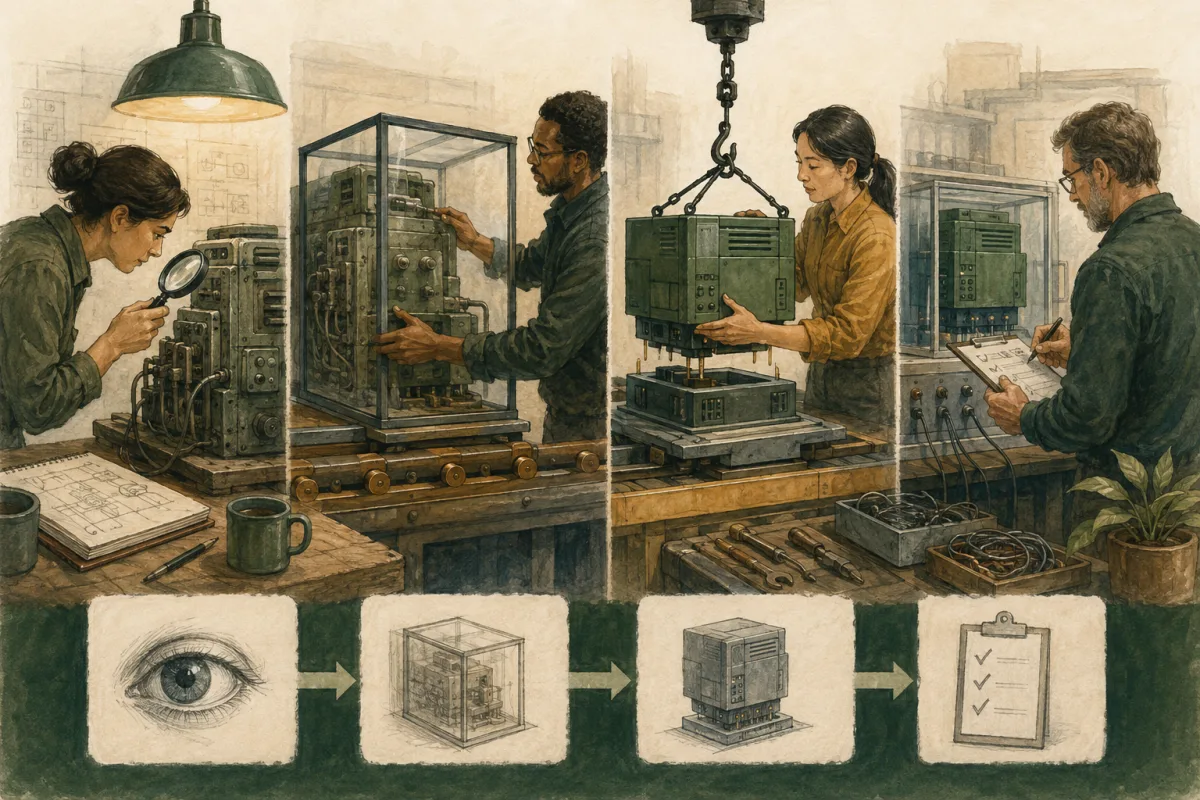
Incremental replacement is attractive when a system is large, deeply embedded in operations or difficult to replace in one event. It may be less useful when the application is small, the required behavior is well understood and coexistence would introduce more complexity than a controlled replacement.
AWS’s implementation guidance highlights practical risks such as unclear domain boundaries, routing-layer bottlenecks and data consistency during coexistence. Treat these as design questions to resolve, not details that disappear because the migration has been labeled incremental.
The broader principle is to choose a transition that the organization can control. A modular monolith, a purchased product or a targeted repair may fit better than a new fleet of services. The target should follow the business and operating requirements.
Build a decision record for repair, replacement or retirement
A decision record makes the trade-off reviewable and prevents a preferred technology from becoming the unstated objective. Keep the record short enough to update when evidence changes.
| Decision element | What to document |
|---|---|
| Business constraint | The current limitation and who experiences it |
| Desired capability | What users or operators must be able to do afterward |
| Options | At least the credible alternatives, including targeted repair or retirement where relevant |
| Evidence | Observed workflows, incident history, costs, dependencies and known gaps |
| Transition | Coexistence, data movement, cutover and reversal assumptions |
| Capacity | People needed to change and operate both systems |
| Acceptance | Technical and business evidence required before expansion |
| Review trigger | The condition that would cause the company to revisit the decision |
Separate estimates from facts. A vendor proposal is evidence of an offered price and scope, not proof that migration effort or operating savings will match the proposal. An internal estimate can also be wrong, especially when important business rules remain undiscovered.
Use ranges and explicit assumptions for uncertain work. Identify what the first delivery slice will teach the company and how that learning affects the next commitment. This makes the investment easier to govern than a large plan that claims certainty before discovery.
Plan for the period when two systems exist
Coexistence is a real operating state, not a brief inconvenience to omit from the budget. During transition, the company may need to monitor two systems, support two workflows and maintain a routing or synchronization mechanism. Identify who owns each responsibility and when the temporary work should end.
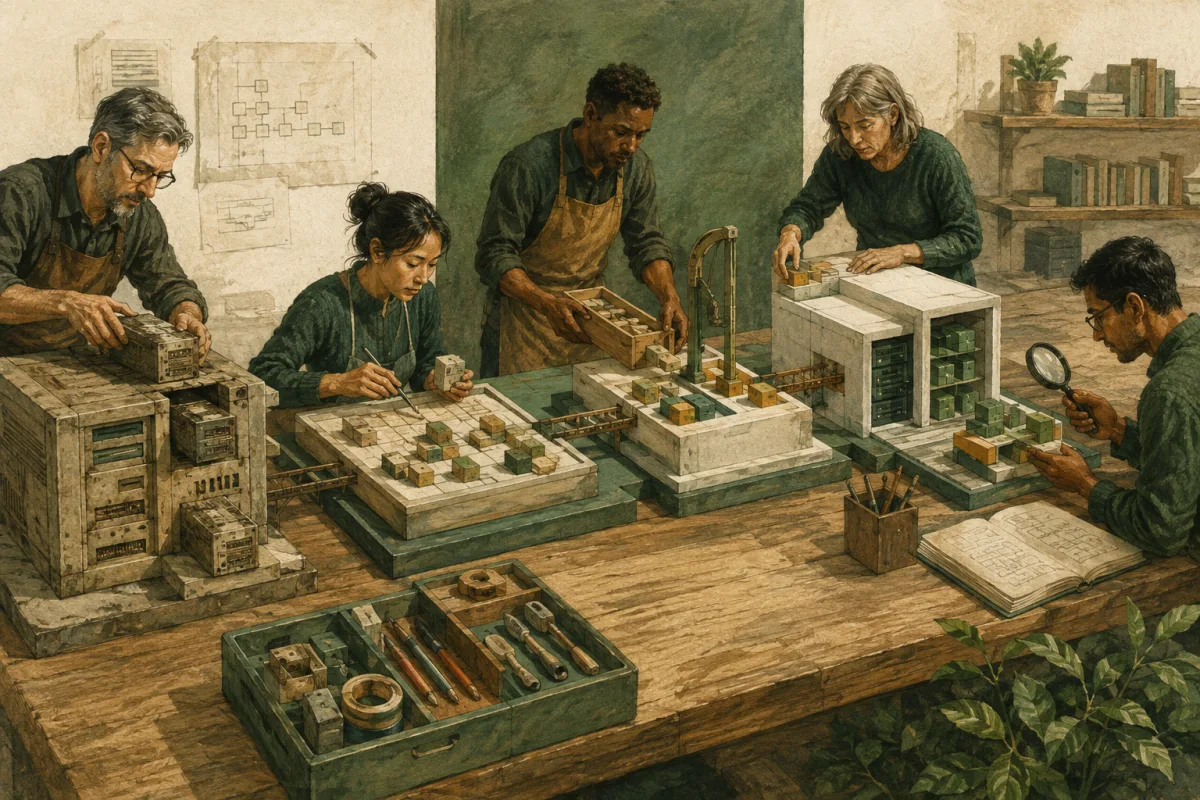
Define which system is authoritative for each kind of data. If both systems can update the same business entity, explain how conflicts are detected and resolved. If one system is read-only, state how fresh its data must be and what happens when synchronization is delayed.
Prepare support staff for the distinction between old and new behavior. A customer may use the new workflow while an internal team still sees the old administration screen. Without a clear transition map, support can apply the wrong correction or misinterpret an expected delay as a defect.
Include the temporary architecture in incident planning. If the routing layer fails, who responds? If the new component must be withdrawn, can the old system still serve the affected users with correct data? If reversal is no longer possible after a particular step, make that boundary explicit before the step occurs.
Test business behavior as well as software components
Modernization tests should protect the behavior the company has decided to retain and verify the improvements it intends to make. Unit and integration tests are useful, but they cannot establish that the new workflow addresses the operator’s actual task if the requirement is wrong.
Create representative scenarios with business owners. Include ordinary cases, historical exceptions, invalid inputs, corrections, interrupted operations and recovery. For a customer-onboarding workflow, that might include a new standard account, a custom contract, an existing customer changing plan and an operator correcting a mistaken setting.
Where old and new results are compared, distinguish intended changes from regressions. A difference is not automatically a defect if the new system deliberately removes an obsolete rule. It is also not automatically an improvement because the new implementation is cleaner. The responsible owner should approve the expected behavior.
Test the operational work around the feature: permissions, audit evidence, monitoring, support actions and recovery. The company needs to know that authorized people can operate the system when the original delivery team is not present.
Make the economics visible beyond the build estimate
A modernization budget should include discovery, implementation, data work, integration, testing, training, coexistence and retirement. It should also show the ongoing cost of the new operating model. Omitting these categories can make a proposal appear cheaper while moving necessary work outside the quoted scope.
Compare the options over the same planning period and assumptions. A purchased platform may reduce custom development but add recurring licensing, configuration and integration work. A rebuild may reduce some legacy constraints while requiring new operational skills. A targeted repair may deliver value sooner but leave a known limitation for later review.
Include the cost of continuing the current system, but avoid inventing a precise “cost of delay” when the underlying business effect is uncertain. State which costs are observed, which are estimated and what evidence would improve the estimate. This helps finance and technology leaders assess the decision without relying on a dramatic savings claim.
Review economics after the first meaningful slice. Compare actual effort, new operating work and achieved capability with the assumptions. Change the plan when the evidence warrants it. The purpose of a staged investment is to preserve the ability to learn before committing the entire programme budget.
Retire the old component deliberately
A migrated feature can remain dependent on the old system through reports, scheduled jobs, customer support tools or an occasional export. Before retirement, inspect those consumers and confirm that their needs have been addressed. A quiet system is not necessarily unused; some workflows run monthly, quarterly or only during an exception.

Agree the required retention and access arrangements with the relevant business owners and advisers. Technical teams should not guess which records can be deleted or how long they must remain accessible. Separate retirement of an application from deletion of the information it contains.
Remove obsolete credentials, integrations and paid services through the company’s normal controls once they are no longer needed. Update documentation and ownership records so future teams do not accidentally reconnect a retired dependency. Record any capability that remains deliberately contained rather than fully replaced.
The retirement decision is part of the acceptance process. If the old component cannot yet be removed, explain the remaining dependency, its cost and the condition that will allow the company to finish.
Questions leaders ask about legacy modernization
Is modernization the same as moving to the cloud?
No. A cloud move changes where or how a system operates. Modernization may also change workflows, architecture, data ownership, delivery practices or support capability. A system can move to the cloud while retaining the same business constraints.
Should we rewrite a monolith as microservices?
Only if the requirements and team capability justify that architecture. Separate services introduce their own coordination and operating work. Consider a better-structured monolith, targeted extraction or another option before treating service count as a measure of progress.
How do we choose the first component to replace?
Choose a slice that addresses a meaningful constraint and can be bounded, tested and operated. It should expose enough of the transition to teach the team without making the first experiment unnecessarily consequential. Include data and consumer dependencies in the assessment.
Can we modernize while delivering new features?
Often, but the plan must acknowledge shared capacity and dependencies. Some new features can be delivered through the new boundary; others may still require legacy changes. Agree priorities and avoid planning both programmes as though each has exclusive access to the same team.
When should we stop the programme?
Review whether the intended capability has been achieved and whether further replacement still has a justified benefit. Complete modernization of every old component is not always necessary. Deliberate containment can be a valid decision when the remaining system is supportable and its constraints are understood.
Define done as company capability
Modernization is complete when the target business capability works, operating risk is acceptable, economics are understood, data is trusted, the team owns the result, and the legacy component can be retired or deliberately contained.
A new architecture diagram is not the finish line. The proof is that customers and operators can use the capability, failures can be managed, changes are safer, and the company is less dependent on the program that created it.
Frequently asked questions
Should we rewrite a legacy system from scratch?
Only after evidence shows that incremental repair, isolation, replacement, replatforming, or retirement cannot meet the business outcome at acceptable risk and cost. Full rewrites often underestimate hidden rules and transition work.
How do you start legacy modernization?
Start with the business result and a map of users, data, interfaces, rules, operations, failure modes, costs, and ownership. Then choose the smallest change that creates a safe boundary or measurable capability.
What should a fractional CTO own in modernization?
The CTO can own option analysis, decision rights, investment sequence, risk, architecture boundaries, delivery governance, vendor incentives, acceptance evidence, and handover.
How do you avoid business disruption during modernization?
Use incremental seams, observability, reconciliation, controlled cutovers, rollback, parallel verification where justified, trained operators, and explicit business acceptance.
Sources and further reading
Turn research into a mandate
See the cost and hiring model before you shortlist.
Use the free calculator, then save a candidate search or post a transparent role when the mandate is ready.